Review · MÁLAGA
Birding Costa del Sol Day tour
Birdlife along the coast can be ridiculously good. This private birding day across Malaga’s region is interesting because it mixes marine, wetland, and mountain habitats in one efficient route. I like that the day is designed around where birds actually show up, not just pretty viewpoints, and that you can get a tailored focus if you have specific species in mind.
Two highlights I really like: the first big push at Punta de Calaburras and Calahonda’s coastal waters, then the main wetland hit at the Guadalhorce Estuary, where waders and waterfowl can be very active. The one thing to consider is weather: the experience depends on good conditions, so if skies don’t cooperate, you may need to adjust plans.
I also like the human side. One of the guides connected with this outing, Florent, has been praised for being friendly and kind, and for going beyond birds into insects and plants, which helps you understand what you’re seeing instead of just ticking boxes.
In This Review
- Key things I’d watch for on this Birding Costa del Sol day
- A private birding day that actually follows where birds feed
- Punta de Calaburras and Cabo Pino: coastal birdwatching with winter and migration energy
- Playa Guadalhorce and the Guadalhorce Estuary: waders, waterfowl, and the best-day species surge
- The Rio Grande riparian circuit: a calmer stop with big bird potential
- Mirador de Juanar: limestone views over the Costa del Sol and Africa, plus raptor timing
- Sierra de Las Nieves area: Mediterranean reservoir and stream fed by a national park
- Price and value: $433.72 per group can be a bargain or a splurge
- What to bring for comfortable birding across five different habitats
- Who this birding day fits best
- Should you book Birding Costa del Sol Day tour?
- FAQ
- How long is the Birding Costa del Sol day tour?
- What is the meeting point for the tour?
- Is pickup available?
- Is this a private tour?
- What language is the tour offered in?
- Are there admission tickets you need to pay for at stops?
- How and when do I receive confirmation?
- What should I expect at the Guadalhorce Estuary stop?
Key things I’d watch for on this Birding Costa del Sol day
- A habitat-hopping route: coast to estuary to river to limestone heights
- Strong wetland potential at Playa Guadalhorce with waterfowl and waders
- Bird of prey timing suggested around Mirador de Juanar
- Free admission at each stop so your day stays predictable
- Private group setting (up to 4) for more personal pace and attention
- Pickup offered with a flexible meeting point depending on your group
Weighing it up? Set it beside a few Málaga favourites first.
- Malaga: Catamaran Sailing Trip with Sunset Option★ 4.4 · 8,613 reviews
- Málaga: Alcazaba and Roman Theatre Guided Tour With Entry★ 4.8 · 5,792 reviews
- Ronda and Setenil Tour with Free Time and Map from Málaga★ 4.8 · 5,344 reviews
- From Málaga: Caminito del Rey Day Trip & Guided Tour★ 4.8 · 4,683 reviews
A private birding day that actually follows where birds feed
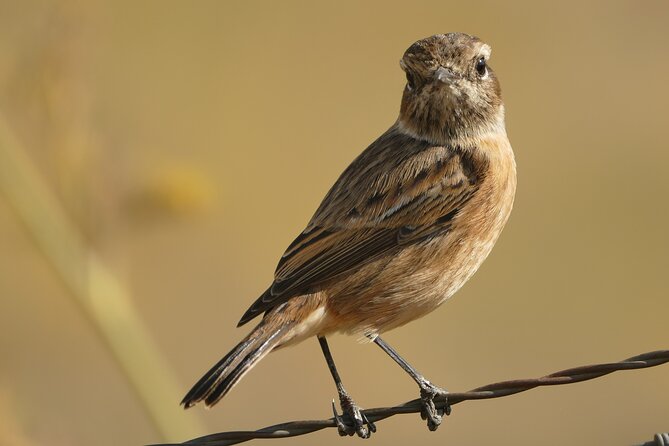
This is a private tour/activity, so you’re not sharing the day with a crowd. For birding, that matters. A smaller group lets you pause longer when activity picks up, linger when a flock moves, and adjust on the fly without worrying about holding up strangers.
The route is built on a simple idea: different species like different “rooms” in the natural world. Early on, you’re working coastal areas like Punta de Calaburras, then you move to the wet, open world of the Guadalhorce Estuary. After that, the day shifts again to river edges and then up into higher ground near El Juanar and the Sierra de Las Nieves area.
You’ll spend roughly 8 hours total, and you’re offered pickup. The meeting point is flexible based on your group, and the tour runs between 9:00 AM and 6:00 PM on Monday through Friday for the stated booking window.
Finally, it’s offered in English and uses a mobile ticket. That’s a small detail, but on a long, multi-stop day it helps you keep things simple.
Punta de Calaburras and Cabo Pino: coastal birdwatching with winter and migration energy
Stop one is Punta de Calaburras, with birdwatching around Cabo Pino and the Calaburras lighthouse area within a marine protected zone (Calahonda). This stop is especially noted as a good place in winter and during migration season, which is exactly when coastal birds tend to concentrate along predictable stretches.
What you’re aiming for here is the kind of birding that feels like scanning a moving horizon. Coastal zones can deliver seabirds and shore birds, plus birds linked to marine productivity. Even if you don’t see a huge spectacle immediately, the value is in “reading” the coastline: where birds circle, where they land, and where they repeatedly return.
Practical note: coastal birding usually rewards patience and steady observation. Bring your binoculars and be ready to stand still longer than you think you’ll need. Also, seaside light can change fast, so give your eyes a moment to adjust each time you shift position.
The drawback is that coastal wind can make conditions uncomfortable. If you get cold easily, plan layers, even if the rest of your day is likely warmer.
Playa Guadalhorce and the Guadalhorce Estuary: waders, waterfowl, and the best-day species surge
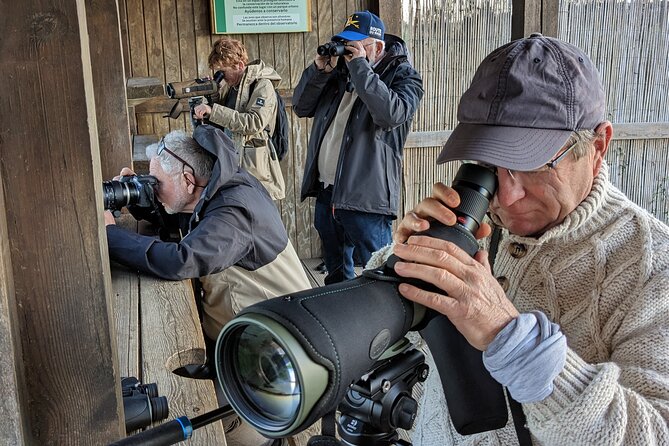
This is the stop that anchors the day. Visiting the Guadalhorce Estuary is described as compulsory because it’s considered one of Andalusia’s most attractive wetlands and one of Spain’s best birdwatching sites. It’s a compact reserve, but it can deliver big variety.
The kind of birds you should expect here: waterfowl and waders. The tour also frames this as a place where, on strong days, experienced birdwatchers spot up to a hundred species in a small area. That’s a useful expectation-setting detail. It means you’re not just looking for a few birds; you’re scanning an ecosystem that can produce lots of different sightings over time.
Why this works as a tour design: after the coast, you’re moving into a wetland where birds gather to feed and rest. Wetlands reduce the “searching” time because birds tend to concentrate in predictable feeding zones.
What to watch for: activity patterns. If the light and wind are good, movement tends to increase, and you can get repeat views of different species as flocks rotate. If you arrive and it feels quiet at first, it’s often worth waiting a bit. Wetlands can “switch on” when conditions line up.
The only real consideration here is time. The stop is about 2 hours 30 minutes, so prioritize your best scanning areas and don’t burn your whole window on one small patch.
- Malaga: Catamaran Sailing Trip with Sunset Option
★ 4.4 · 8,613 reviews - Málaga: Alcazaba and Roman Theatre Guided Tour With Entry
★ 4.8 · 5,792 reviews - Ronda and Setenil Tour with Free Time and Map from Málaga
★ 4.8 · 5,344 reviews
The Rio Grande riparian circuit: a calmer stop with big bird potential
After Malaga, you continue on a long circuit to the Rio Grande, another interesting area with riparian forest. This is the part of the day where the birding vibe usually becomes more about edges: waterline, tree borders, and the in-between spaces where birds travel.
Riparian forest areas often hold birds that are less obvious in open habitat. Even if you’re not seeing constant flocks, you may get better luck with smaller, harder-to-spot birds that move through cover. That’s also where understanding habitat pays off. When you know what kind of environment you’re looking at, your brain starts spotting likely “channels” for bird movement.
This stop is about 1 hour, so it’s not meant to be a long detour. Think of it as a bridge stop that adds another habitat layer to the day, rather than a single big draw like the estuary.
My advice: use this hour to reset. Check your notes, adjust your gear, and keep your scanning pattern steady. A lot of birding misses happen when people rush this kind of stop.
Mirador de Juanar: limestone views over the Costa del Sol and Africa, plus raptor timing
Next comes Mirador de Juanar, with El Juanar described as a white limestone mountain and a place with views over the Costa del Sol and Africa. That’s more than a postcard moment. High points often give you better sightlines and help you detect birds moving across ridges and thermals.
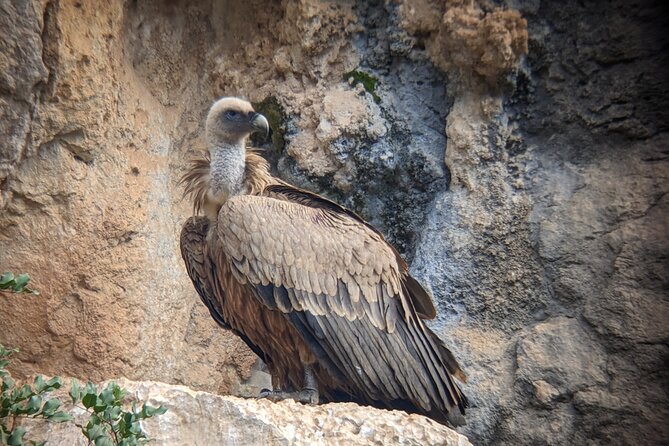
The tour also suggests timing should be good for some birds of prey. That doesn’t guarantee raptors will appear, but it’s a useful reason to focus your attention upward and across wider areas as the light changes. Even on slower days, upland areas often produce at least one or two surprising sightings.
There’s also a comfort detail: on hot days, the pine forest is said to protect you a little from heat. That matters in southern Spain summers and shoulder seasons. If you’re birding in warm weather, having shade within reach can keep your attention sharp longer.
This stop lasts about 1 hour 30 minutes, so again: keep your “best scan zone” in mind. Don’t spend the whole time staring at the scenery without checking the sky and edges.
Sierra de Las Nieves area: Mediterranean reservoir and stream fed by a national park
The final major birding swing is at Parque Nacional Sierra De Las Nieves, where you visit a small Mediterranean reservoir and stream flowing from nearby Sierra de Las Nieves National Park. The promise here is more impressive biodiversity beyond the coast, and the route is designed to end with that sense of ecological shift.
A reservoir and stream can bring a mix of species that like freshwater edges, plus birds that track insects and vegetation near water. Even when the water surface isn’t busy, the margins often are. Also, moving from open coastal and wetland habitats into something more inland and vegetated tends to reward a more careful, slower kind of scanning.
It’s about 1 hour 30 minutes. That’s enough time to settle into the edges and look for movement, but not enough time to do a full “walk and stalk” search. So be ready to observe from a few smart vantage points.
The payoff is a final habitat contrast that helps you understand why this region supports so many kinds of birds. If you only bird on the shore, your list stays narrow. This end segment expands the kinds of ecosystems you’re exposed to in a single day.
Price and value: $433.72 per group can be a bargain or a splurge
The tour price is listed as $433.72 per group, up to 4 people. Duration is about 8 hours, and it’s a private outing with pickup offered.
Here’s the key value math: if you book as a full group of four, you’re effectively paying around $108 per person. If it’s just two people, the per-person cost doubles. That’s why who you travel with matters here.
Private birding is usually expensive because you’re paying for a guide’s time plus the transportation and planning that gets you to multiple habitats in one day. What makes this one feel more reasonable is that admission at stops is indicated as free, and the route includes multiple habitat types rather than repeating the same kind of spot.
The other value driver is the guide’s approach. The standout feedback connected to this experience is about understanding the broader living world. Florent has been praised for being friendly and knowledgeable across birds, insects, and plants, and for tailoring the outing to a guest’s interests. That kind of personalization can make the difference between a day where you see birds and a day where you build lasting bird literacy.
If you’re a serious list-maker, that tailoring matters. One example given is a guest spotting 30 new species on their life list during the outing, which tells you the guidance quality can translate into real results.
What to bring for comfortable birding across five different habitats
Even though this is structured and guided, you’ll get more from the day if your kit supports long observation.
Bring:
- Binoculars (and check they fit your hands comfortably for long scanning)
- A light but warm layer for coastal wind and higher ground
- Sun protection (hat, sunscreen) since the route includes upland and open viewpoints
- Solid walking shoes with decent grip
- A small notebook or phone notes for quick species and location tracking
Also, if you care about species IDs, ask your guide how they’re thinking about what you’re seeing. A good guide will explain what cues to watch for, not just name birds. The feedback around Florent specifically points to that broader, nature-linked way of learning, which helps you spot and understand more.
One more tip: pace yourself. This isn’t one long hike, but it is a day with multiple stops and repeated scanning. If you go too hard at stop one, your focus may dip later—especially at the estuary.
Who this birding day fits best
This tour is ideal if you:
- Want a private birding day with minimal waiting around
- Like variety in habitats: coast, estuary, river edges, uplands, and inland water
- Are working on a life list or simply want more informed sightings
- Prefer English-led guidance
- Appreciate guides who connect birds to insects and plants, so you understand the system
If you’re brand-new to birdwatching, you might still enjoy it, especially because the guide support can help you interpret what you’re seeing. That said, birding can be slower than sightseeing. If you want constant action, you’ll have to embrace patience.
If you’re experienced, the habitat range plus the estuary focus make it a smart use of a single day. The tour is also booked with decent lead time on average, so serious birders often lock in dates earlier than they would for a casual excursion.
Should you book Birding Costa del Sol Day tour?
Yes, if your goal is a single-day birding circuit that feels focused on real habitats. The big reasons to book are the combination of Punta de Calaburras for marine birdwatching, the Guadalhorce Estuary for waterfowl and waders, and the inland finishing sequence around Rio Grande and the Sierra de Las Nieves reservoir and stream.
I’d book especially if:
- You’re traveling with one or two people and can fill most of the group
- You value learning, not just spotting
- You’re visiting around winter or migration periods, when the coastal stop is said to be especially strong
I’d hesitate only if you’re extremely weather-dependent. Since good weather is required, you should plan flexibility. If rain and wind are a serious deal-breaker for you, consider building buffer days into your Malaga schedule.
FAQ
How long is the Birding Costa del Sol day tour?
It runs for about 8 hours.
What is the meeting point for the tour?
The start is in Marbella, Málaga, Spain, and the meeting point is flexible depending on your group.
Is pickup available?
Yes, pickup is offered.
Is this a private tour?
Yes. It’s a private tour/activity with only your group.
What language is the tour offered in?
The tour is offered in English.
Are there admission tickets you need to pay for at stops?
The stops listed show admission tickets as free.
How and when do I receive confirmation?
You should receive confirmation within 48 hours of booking, subject to availability.
What should I expect at the Guadalhorce Estuary stop?
You should expect a wetland setting with waterfowl and waders, and on the best days the tour notes very high species potential.
If you want, tell me when you’re traveling and whether you’re more into seabirds, raptors, or waders. I can help you decide which stops will likely matter most for your birding style.
More Málaga Trips, Reviewed
- Malaga: Catamaran Sailing Trip with Sunset Option
★ 4.4 · 8,613 reviews - Málaga: Alcazaba and Roman Theatre Guided Tour With Entry
★ 4.8 · 5,792 reviews - Ronda and Setenil Tour with Free Time and Map from Málaga
★ 4.8 · 5,344 reviews - From Málaga: Caminito del Rey Day Trip & Guided Tour
★ 4.8 · 4,683 reviews - From Malaga and Costa del Sol: Gibraltar Tour
★ 4.4 · 4,483 reviews - Malaga: Teatro Flamenco Malaga Live Flamenco Show
★ 4.7 · 4,254 reviews