
Review · MáLAGA OLD TOWN WALKS
Málaga: Old Town Guided Walking Tour
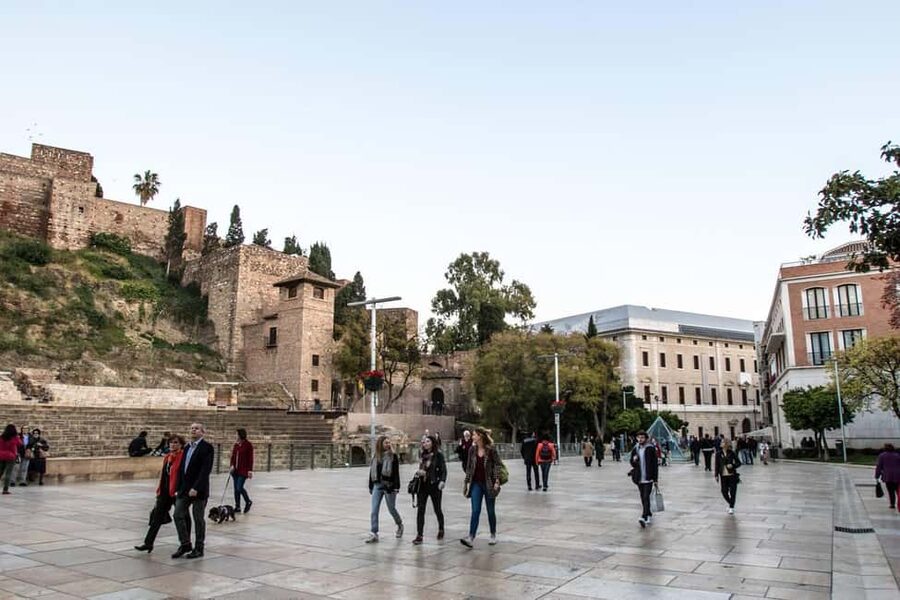
A 90-minute walk can unlock Málaga fast. You’ll follow an official guide through the Old Town’s big layers—Alcazaba fortress viewpoints, the Cathedral’s façade known as La Manquita, and the traditions that shape daily life, from Holy Week to the Feria. It’s all on foot, mostly seen from the outside, and you start right by the glass pyramid near the Roman Theatre.
I really like how the route gives you quick orientation. You hit the main landmarks in an efficient loop, so you stop feeling lost and start recognizing neighborhoods by their look and vibe. I also love the guide style—Rocío and Lydia are repeatedly praised for being clear, entertaining, and the kind of people who genuinely enjoy answering questions.
One thing to consider: you’re walking and sightseeing outdoors for about 90 minutes. If it’s very hot or raining, you’ll feel it, and audio recording isn’t allowed—so plan to take notes instead of expecting a save-for-later recording.
In This Review
- Key things to know before you go
- Why This 90-Minute Old Town Walk Is So Useful
- Starting at the Glass Pyramid by the Roman Theatre
- Alcazaba Views: Fortress Power and City Edge
- Roman Theatre Area: A Quick Jump to the Roman Layer
- Church of Santiago: Small Stop, Good Context
- Picasso Museum Area: Pop Culture Meets Place
- Iglesia Capitular de El Sagrario and the In-Between Moment
- Málaga Cathedral Facade: La Manquita at Bishop Square
- Plaza de la Constitución and Larios Street: The Urban Read
- Customs You’ll Hear: Holy Week, Feria, and Christmas in Málaga Style
- Price and Value: What $15 Gets You (and What It Doesn’t)
- Who This Tour Fits Best
- Should You Book This Málaga Old Town Guided Walking Tour?
- FAQ
- How long is the Málaga Old Town guided walking tour?
- Where do I meet the guide?
- What languages are offered?
- Is the tour wheelchair accessible?
- Are pets allowed on the tour?
- Can I record the tour with audio?
Key things to know before you go
- Meeting point is easy to spot: the glass pyramid at Alcazabilla Street in front of the Roman Theatre; your guide carries a yellow umbrella or a Memorias de Málaga sign.
- Outside-only sightseeing: you’ll see major sites from the street and viewpoints, not a string of museum interiors.
- Official, local storytelling: expect guided context that connects monuments to Málaga’s characters and customs.
- La Manquita in Bishop Square: you’ll focus on the Cathedral façade people actually recognize.
- Built for practical exploring: wheelchair accessibility is noted, and it’s petfriendly.
Keep wandering the old centre, more routes
- Malaga Bike Tour – Old Town, Marina & Beach★ 4.7 · 1,150 reviews
- Málaga: 3-Hour Complete Walking Tour with Tickets★ 4.5 · 976 reviews
- Málaga: Highlights, Hidden Gems and Coast Vintage Bike Tour★ 4.7 · 459 reviews
- Málaga: Cathedral, Alcazaba, Roman Theater Walking Tour★ 4.7 · 315 reviews
Why This 90-Minute Old Town Walk Is So Useful
Málaga can feel like a “big city with one center” at first. This tour fixes that fast. Instead of bouncing randomly between monuments, you get a planned route that links the city’s major eras—Roman, Christian, and the Moorish period represented by the fortress—plus the culture that locals still live.
At about 90 minutes, it’s long enough to make sense of what you’re seeing. It’s short enough to fit your first day, even if you arrive jet-lagged or tired from the beach. For me, that balance matters. I’d rather know where things are than just collect photos.
You also get stories that go beyond the stones. You’ll hear how Málaga marks major events like Holy Week and the Feria, plus how Christmas traditions show up in local life. That context helps later when you walk around on your own and notice details you would’ve otherwise missed.
Starting at the Glass Pyramid by the Roman Theatre
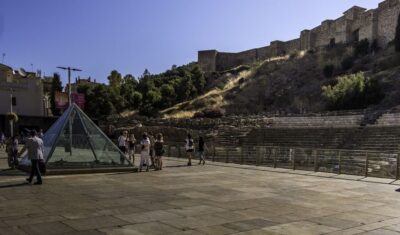
The meeting point is the Pirámide de Cristal at Alcazabilla Street, directly in front of the Roman Theatre area. Your guide should be easy to find—look for a yellow umbrella or the sign for Memorias de Málaga.
This start location is smart for two reasons. First, it puts you right in the historic zone without extra transit. Second, you’re beginning at a place that signals Málaga’s layered past. Even if the Roman Theatre isn’t the only star of the day, it sets the tone: you’re walking a city where different centuries overlap.
Practical tip: wear comfortable shoes right away. The tour is “walking through the city,” and while it’s not described as extreme, it’s still a real walk—no sitting around while the guide does all the work.
Alcazaba Views: Fortress Power and City Edge
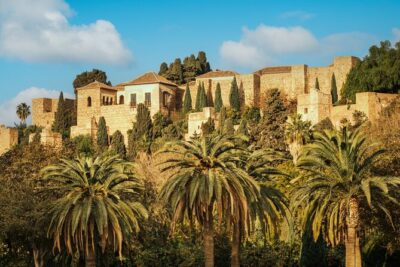
The first major stop is the Alcazaba of Málaga, described as a well-preserved fortress with a history you’ll learn on the spot. Even when you only see it from the tour route, you can feel the defensive logic in the way the fortress sits above the city.
What I like about the Alcazaba stop is how it gives you the city’s geography. When you’re looking down from the fortress zone, you start to understand why later civilizations built where they did. You also get scenic outlooks “on the way,” which matters on a first visit. It’s not only about monuments—it’s about sightlines and how streets connect.
A possible drawback: fortress areas can mean stairs and slopes depending on the exact street segment. The tour notes wheelchair accessibility with no problems, but if you’re using mobility aids, it still helps to arrive with a little extra patience and ask your guide how they’re handling any steeper sections.
The old town on foot, more routes
- Málaga: 2h Walking Historical Tour–Art, Culture and Legends
★ 4.9 · 341 reviews - Malaga Private Walking Tour, Alcazaba & Catamaran Cruise
★ 5.0 · 159 reviews - Walking Tour of Malaga’s Historic Center
★ 4.5 · 134 reviews
Roman Theatre Area: A Quick Jump to the Roman Layer
After the Alcazaba, you move into the Roman Theatre area. The emphasis is on a guided explanation and the surrounding views, rather than a long, detailed deep-in-the-weeds history lecture.
This stop works because it changes your mental frame. You go from a fortress that reads like military architecture to a Roman cultural landmark that reads like public life. That contrast is the point: Málaga wasn’t one thing across time. It kept rewriting itself.
If you’re a photo person, this part is also useful for framing. Even from viewpoints and outside perspectives, you can connect what you see with what you’re hearing: stone meets story, and suddenly your camera roll has meaning.
Church of Santiago: Small Stop, Good Context
Next comes Church of Santiago. This is one of those stops that might look modest compared with the big-name sites, but it’s valuable for orientation. You start to notice how the Old Town’s religious buildings anchor neighborhoods and create visual landmarks you can use later.
The guide’s job here is to give you the “why” behind placement and style. You’ll walk through the area with explanations, which helps the church stop feel less like just another exterior photo and more like a chapter in the city’s timeline.
If you like understanding daily life in historic places, you’ll appreciate how these stops add texture. This tour isn’t only about the headline sights; it also shows you the bones of how the town is organized.
Picasso Museum Area: Pop Culture Meets Place
The tour includes Picasso Museum Málaga, again with the focus on what you can see from the street and surrounding area. The big value isn’t what’s inside—it’s why the location matters in Málaga’s identity.
Picasso is one of those connections that can feel abstract until you see the city context. When you hear the guide connect him to Málaga’s past and present, the museum area becomes more than a name. It becomes a signal that the city doesn’t treat art as something distant. It’s part of local storytelling.
If you’re a first-time visitor and you want a smart next step after the walk, this is where the guide’s questions and answers can help. You’ll likely get pointers on what to see next, even if the tour itself stays outside.
Iglesia Capitular de El Sagrario and the In-Between Moment
You’ll also pass Iglesia Capitular de El Sagrario, with guided context as you move through the Old Town. These stops tend to work best when you let the guide connect architecture to the human rhythms around it.
There’s also an additional short stop in the middle of the route (listed as part of the walk). That kind of “in-between” moment often exists for a reason: it gives your guide time to explain a transition in the city’s story and helps the group keep moving without rushing the big sites.
My advice: don’t treat these smaller stops as filler. On tours like this, they’re how the city becomes understandable at walking speed.
Málaga Cathedral Facade: La Manquita at Bishop Square
Now for the headline you’ll remember: Málaga Cathedral and the façade locals call La Manquita, found in Bishop Square.
This is one of those details that makes Málaga feel specific. The Cathedral is easy to recognize once you learn what people mean by La Manquita, and that’s exactly the kind of local nickname that makes a place click. You’re not just seeing a big building; you’re understanding why people talk about it.
The tour keeps it outside, so you’re admiring and learning rather than doing an interior visit. That said, the façade viewing angle is still powerful, and the guide’s explanation helps you notice architectural cues you might otherwise overlook.
If you only have one day and you want at least one “wow, I get it now” moment, this Cathedral stop is a strong candidate.
Plaza de la Constitución and Larios Street: The Urban Read
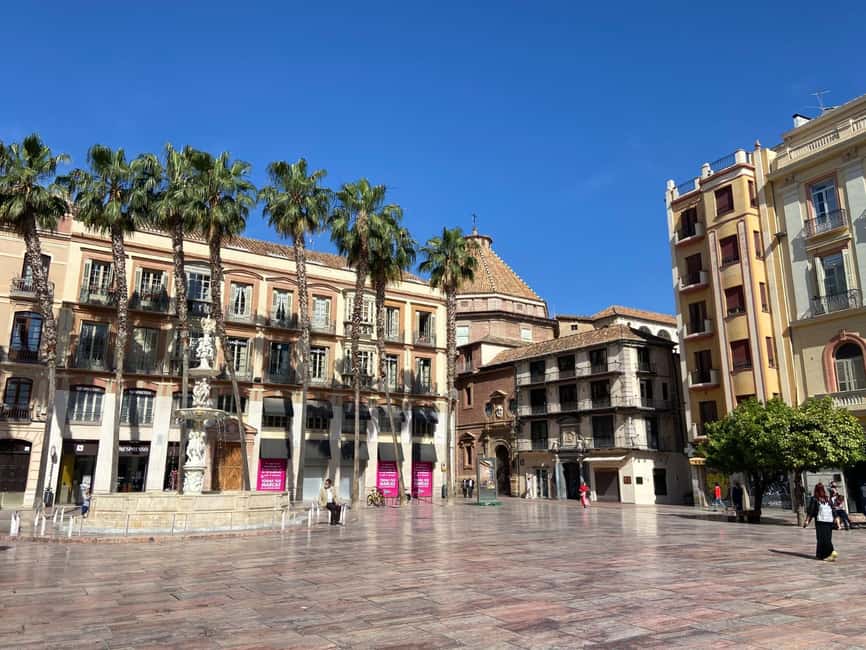
After the Cathedral area, you’ll walk to Plaza de la Constitución, Málaga. Plazas are more than pretty squares in Spain—they’re social rooms for the city. Even without entering any museums, you’ll learn how this space fits into Málaga’s structure and daily movement.
Then you’ll head to Larios Street, described as one of Europe’s most elegant streets. This is a different mood than the fortress and older lanes. It’s where you feel the city’s more modern, more promenade side—still tied to the Old Town, but more open and showy.
The walk ends at Calle Marqués de Larios. I like this kind of finish because it leaves you with a clear landmark to circle back to later. It’s a “you’re oriented now” kind of ending, not a “return to the start and figure it out” ending.
Customs You’ll Hear: Holy Week, Feria, and Christmas in Málaga Style
One of the tour’s strengths is that the guide doesn’t treat culture as separate from architecture. You’ll learn Málaga’s customs connected to major yearly events, including:
- Andalusian Holy Week
- The Feria (Málaga’s party season)
- Christmas celebrations in true malagueña style
Why that matters: when you later spot religious processions, festival posters, or family gathering vibes, you’ll know what you’re looking at. You’ll also understand why certain streets and public spaces feel like natural stages for those events.
This is the kind of context that makes a city feel lived-in, even when you’re just passing through.
Price and Value: What $15 Gets You (and What It Doesn’t)
At $15 per person for 90 minutes, the value comes from the official local guiding and the concentration of major sights. You’re not paying for one building. You’re paying for a guided route that stitches together multiple eras, then adds cultural context you can’t easily extract from a map.
There’s also a “first-day payoff.” If you book this early, you’ll spend the rest of your stay walking with purpose, not just walking.
What it doesn’t promise: interiors. The tour is described as everything seen from outside. If your goal is deep museum time or paid entry experiences, you’ll need to plan separate visits. Also, audio recording isn’t allowed, so you’ll want to take notes or rely on your own memory.
If you like asking questions, this tour is set up well for that. Multiple guides—especially Rocío and Lydia—are praised for clarity, fun delivery, and being open to questions, which turns the walk from a lecture into an actual conversation.
Who This Tour Fits Best
This tour is especially good if you:
- Want a quick, structured overview of Málaga’s Old Town on day one
- Like history that connects to real life and festivals
- Prefer walking routes with clear stops over chasing info on your own
- Want an outdoors route that’s marked as wheelchair accessible and petfriendly
It might be less ideal if you:
- Want mostly indoor visits or museum time
- Need lots of sitting breaks
- Are counting on recording audio during the explanation (it’s not allowed)
If you’re flexible and you enjoy learning while you walk, this is a strong match.
Should You Book This Málaga Old Town Guided Walking Tour?
Yes, you should book it if you want fast orientation plus local storytelling. For $15 and about 90 minutes, you get a guided route that hits the big visual anchors (Alcazaba area, Roman Theatre zone, Picasso museum area, Málaga Cathedral/La Manquita, Plaza de la Constitución, and Larios Street) and adds cultural context for events like Holy Week and the Feria.
Book it early in your trip, ideally on your first morning or afternoon. Then use the rest of your days to follow the streets the guide points out and to choose which sights deserve your longer time later. This tour is designed to make that follow-up easier.
FAQ
How long is the Málaga Old Town guided walking tour?
The tour lasts 90 minutes.
Where do I meet the guide?
Meet at the glass pyramid (Pirámide de Cristal) at Alcazabilla Street, in front of the Roman Theatre. The guide carries a yellow umbrella or a sign that says Memorias de Málaga.
What languages are offered?
The live tour guide is available in English and Spanish.
Is the tour wheelchair accessible?
Yes, it’s listed as wheelchair accessible with no problems mentioned.
Are pets allowed on the tour?
Yes, it’s listed as petfriendly.
Can I record the tour with audio?
No. Audio recording is not allowed.
The Old Town on Foot
- Málaga: 3-Hour Complete Walking Tour with Tickets
★ 4.5 · 976 reviews - Málaga: 2h Walking Historical Tour–Art, Culture and Legends
★ 4.9 · 341 reviews - Málaga: Cathedral, Alcazaba, Roman Theater Walking Tour
★ 4.7 · 315 reviews - Malaga Private Walking Tour, Alcazaba & Catamaran Cruise
★ 5.0 · 159 reviews - Walking Tour of Malaga’s Historic Center
★ 4.5 · 134 reviews - Guided Walking Tour of the Old Town of Frigiliana
★ 5.0 · 101 reviews
More Málaga Trips, Reviewed
- Malaga: Catamaran Sailing Trip with Sunset Option
★ 4.4 · 8,613 reviews - Málaga: Alcazaba and Roman Theatre Guided Tour With Entry
★ 4.8 · 5,792 reviews - Ronda and Setenil Tour with Free Time and Map from Málaga
★ 4.8 · 5,344 reviews - From Málaga: Caminito del Rey Day Trip & Guided Tour
★ 4.8 · 4,683 reviews - From Malaga and Costa del Sol: Gibraltar Tour
★ 4.4 · 4,483 reviews - Malaga: Teatro Flamenco Malaga Live Flamenco Show
★ 4.7 · 4,254 reviews
The Old Centre, Keep Walking
- Malaga Bike Tour – Old Town, Marina & Beach
★ 4.7 · 1,150 reviews - Málaga: 3-Hour Complete Walking Tour with Tickets
★ 4.5 · 976 reviews - Málaga: Highlights, Hidden Gems and Coast Vintage Bike Tour
★ 4.7 · 459 reviews - Málaga: Cathedral, Alcazaba, Roman Theater Walking Tour
★ 4.7 · 315 reviews - Malaga: Complete City Highlights Segway Tour
★ 4.9 · 232 reviews - Malaga Private Walking Tour, Alcazaba & Catamaran Cruise
★ 5.0 · 159 reviews
Fresh Off the Boat: Newly Reviewed Málaga Trips


Málaga Old Town Walks, side by side.
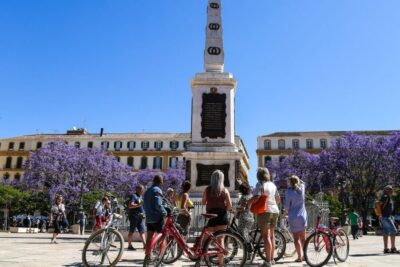 ★ 4.7Malaga Bike Tour – Old Town, Marina & BeachFrom $381,150 reviews
 ★ 4.53-Hour Complete Walking Tour with TicketsFrom $37976 reviews
 ★ 4.7Highlights, Hidden Gems and Coast Vintage Bike TourFrom $33459 reviews
 ★ 4.7Cathedral, Alcazaba, Roman Theater Walking TourFrom $53315 reviews
 ★ 4.9Complete City Highlights Segway TourFrom $61232 reviews
 ★ 5.0Malaga Private Walking Tour, Alcazaba & Catamaran CruiseFrom $264159 reviews
 ★ 4.5Walking Tour of Malaga’s Historic CenterFrom $12134 reviews
 ★ 5.0Highlights and Treasures of Malaga City Bike TourFrom $37119 reviews
Other lists this tour appears in