
Review · MáLAGA OLD TOWN WALKS
Malaga: old town walking tour & flamenco show
Malaga pairs street history with flamenco in one sweep. I like the small group size (limited to 4), and I also like that the official history-focused guide strings together Old Town landmarks with real stories before you head straight to a flamenco show. One possible drawback: flamenco can be hit-or-miss depending on your taste, and at least one recent rating found the show only okay rather than exceptional.
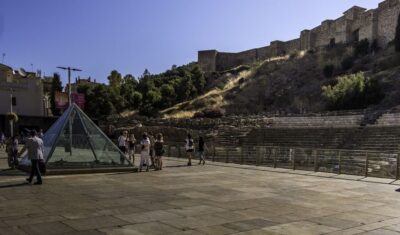
You’ll meet at a very specific spot: the glass pyramid on Alcazabilla Street, opposite the Roman theatre, and the guide carries a yellow umbrella. From there, the walk is designed to get you oriented fast, with big views from the Alcazaba/Roman theatre area and stops around major sights like the Picasso Museum, Sagrario Church, the Saint Thomas Hospital, and Bishop Square. Then the same guide takes you to the show with your ticket already included.
In This Review
- Key things I’d watch for in this tour
- Starting at the Alcazabilla glass pyramid and getting your bearings
- A small-group walk with a history guide who doesn’t just recite facts
- Roman theatre and Alcazaba views: why this part of Malaga matters
- Stops around Malaga’s Old Town: Picasso, Sagrario Church, Saint Thomas Hospital
- The transition from Old Town to flamenco show
- Flamenco show rules and how to enjoy it properly
- Price and value: is $59 worth it?
- Who this tour fits best
- Before you go: practical tips that actually help
- Should you book this Malaga Old Town walking tour and flamenco show?
- FAQ
- How long is the Malaga old town walking tour and flamenco show?
- Where do I meet the guide?
- Is the tour guided in English?
- What’s the group size?
- What’s included in the price?
- Can I take photos or record video/audio at the flamenco show?
Key things I’d watch for in this tour
- Small-group comfort with a limit of 4 participants, so questions don’t get swallowed by a crowd
- Official English guide specializing in local history, plus customs and anecdotes
- Easy-to-find start at the Alcazabilla Street glass pyramid across from the Roman theatre
- Old Town highlights on foot, including the Picasso Museum area, Sagrario Church, Saint Thomas Hospital, and Bishop Square
- Flamenco show ticket included, with rules like no flash and no video/audio recording
Keep wandering the old centre, more routes
- Malaga Bike Tour – Old Town, Marina & Beach★ 4.7 · 1,150 reviews
- Málaga: 3-Hour Complete Walking Tour with Tickets★ 4.5 · 976 reviews
- Málaga: Highlights, Hidden Gems and Coast Vintage Bike Tour★ 4.7 · 459 reviews
- Málaga: Cathedral, Alcazaba, Roman Theater Walking Tour★ 4.7 · 315 reviews
Starting at the Alcazabilla glass pyramid and getting your bearings
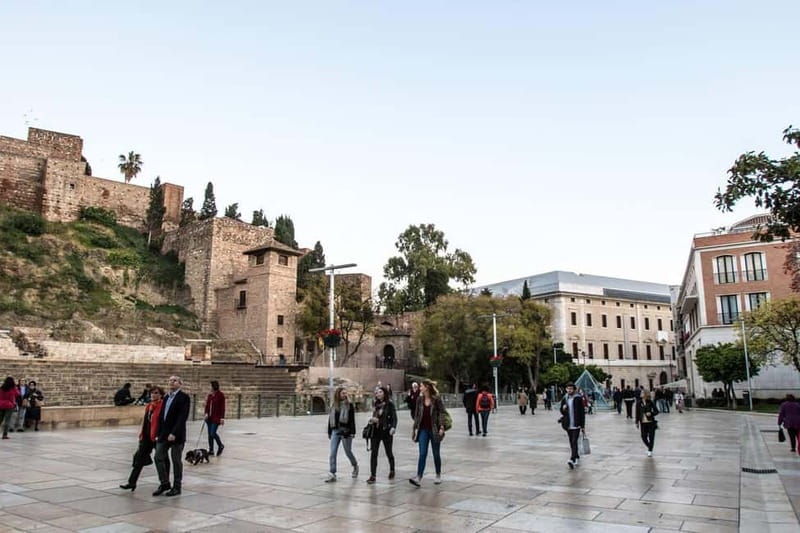
This tour starts where it makes sense: at the glass pyramid on Alcazabilla Street, opposite the Roman theatre. If you’re new to Malaga, this is a smart move because the setting gives you instant context. One glance tells you this isn’t just a pretty city with plaques—Malaga is layers, literally built on top of older eras.
Your guide will be easy to spot with a yellow umbrella. That small detail matters on busy evenings. Arrive a few minutes early, not because the tour is complicated, but because you want to avoid the stress of trying to locate the right person in the wrong spot.
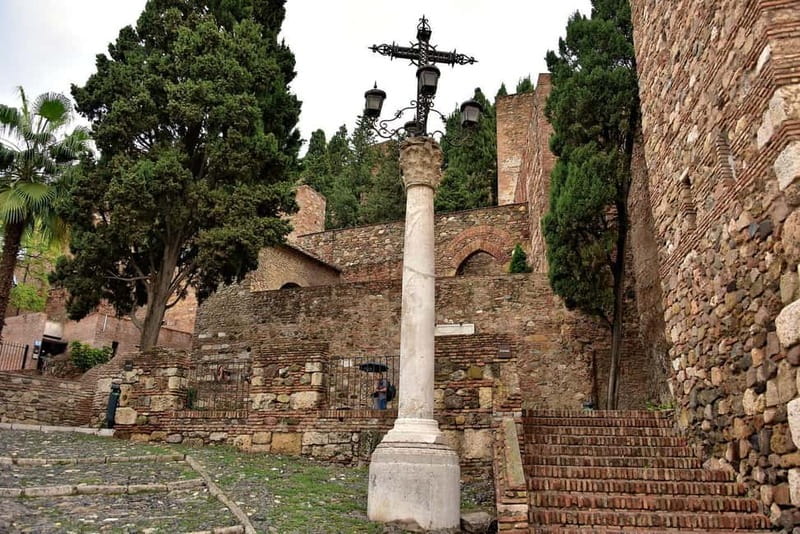
From the start, the route is set up to give you standout views connected to major sights: the Roman theatre and the Alcazaba. Even if you don’t go inside everything on the day, you’re still learning how these places relate to the city’s geography and past. This is the kind of orientation you’ll keep using later when you wander on your own.
A small-group walk with a history guide who doesn’t just recite facts
The tour is officially guided by someone from Malaga who specializes in history. That’s a key difference from the usual walk where you get a handful of dates and then you’re released into the streets. Here, you’re also told local customs and anecdotes—story bits that help the city feel lived-in.
And the group size is the real win. Limited to 4 participants, you’ll get a much tighter experience. That means you can ask practical questions about what you’re seeing right now, not just wait until a big group pauses at the same spot for the same photo.
A quick word on pacing: because you’re also going to a flamenco show afterward, this is built to fit in a 2.5-hour window. Expect an efficient walking style—enough time to understand the major sights, but not so much time that you lose the whole evening.
Roman theatre and Alcazaba views: why this part of Malaga matters

The itinerary emphasizes the viewpoint area around the Roman theatre and the Alcazaba. That’s not random. Malaga’s Old Town is easiest to understand when you see how elevation, walls, and sightlines shape where people built and how they moved.
The guide uses this setting to frame the city—how cultures and eras overlap, and why certain neighborhoods and monuments feel positioned for both defense and display. You’ll get the sense that Malaga didn’t develop in a neat line. It grew by layers, and those layers still shape what you walk past today.
If you care about architecture, you’ll enjoy this segment even without fancy extras. You’re getting the big-picture visual reference points early, so later landmarks like churches and squares make more sense. It’s like turning on subtitles for a movie you already wanted to watch.
Heels and guitar, other flamenco nights
- Malaga: Teatro Flamenco Malaga Live Flamenco Show
★ 4.7 · 4,254 reviews - Malaga: Authentic Flamenco Show at El Gallo Ronco
★ 4.7 · 885 reviews - Malaga: Show and Food at Alegría Flamenco and Restaurant
★ 4.6 · 740 reviews
Stops around Malaga’s Old Town: Picasso, Sagrario Church, Saint Thomas Hospital
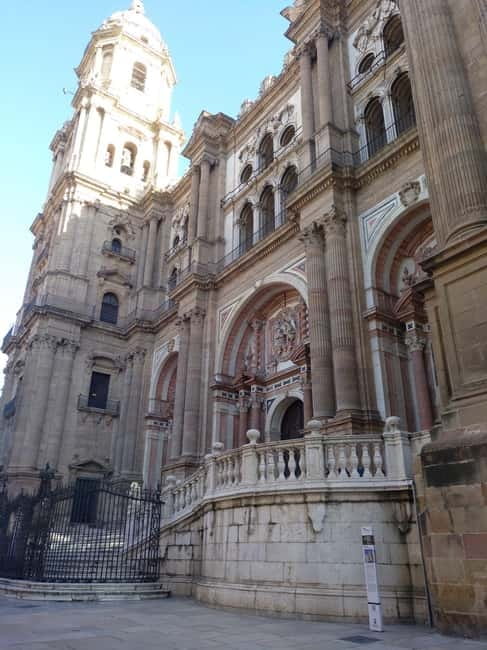
The walking tour loops you through several important landmarks, with the guide connecting each one to story and context.
Here are the main named highlights you should look out for:
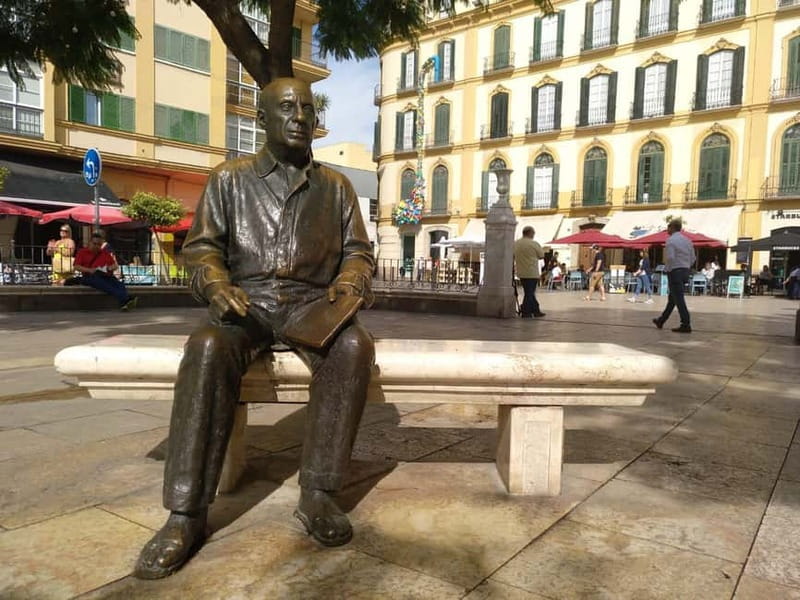
- Picasso Museum: you’ll pass through this area as a key reference point for Malaga’s cultural identity. If you’re an art fan, even seeing the museum location as part of a broader tour helps you connect Picasso to the city’s story, not treat it as a standalone ticket.
- Sagrario Church: churches in Spain often function as both spiritual centers and community landmarks. The guide’s history angle helps you see beyond the exterior and understand why these places became anchors.
- Saint Thomas Hospital: hospitals can feel like boring stops until someone explains what role they played in the city over time. Here, you’re meant to understand it as a piece of how Malaga cared for people through changing eras.
- Bishop Square: squares are where city life tends to organize itself. Even if you just pause and look, this is where the guide’s anecdotes can make the space feel practical—who gathered, what mattered, and why the layout works.
The common thread is that you’re not just collecting sights. You’re learning how the city’s “where” affects its “why.” That makes your independent wandering after the tour more satisfying, because you’re no longer relying on random guesswork.
The transition from Old Town to flamenco show
After the walking portion, your guide takes you to the flamenco show. The ticket is included, so you don’t have to figure out where to go next or negotiate last-minute logistics.
Think of this as a two-part “culture sprint.” First, you build context—history, customs, and the physical cues of Malaga. Then you switch gears to performance, where Andalusian culture shows up in a completely different language: voice, dance, and raw stage energy.
Based on the better end of the ratings, the show’s strongest points are the performers—people specifically loved the dancers and the singers. That’s your cue for what to pay attention to when you arrive: the acting-in-motion, the vocal delivery, and the way the performance holds your focus.
One consideration: flamenco isn’t one-size-fits-all. A darker note from one review found the show only okay. So if you’re extremely picky about performance style, you may want to keep expectations flexible and treat this as a taste of Malaga’s flamenco scene rather than a guaranteed life-changing night.
Flamenco show rules and how to enjoy it properly
The show comes with clear rules. You shouldn’t plan on recording, and you’ll want to be mindful about photos.
Here’s what you need to know:
- Flash photography is not allowed
- Video recording is not allowed
- Audio recording is not allowed
Pets are also not allowed on this activity. So if you’re traveling with a companion animal, you’ll need to arrange separate care.
Practical tip: fully charge your phone before you go, then leave it alone during the show. Not because you’ll be scolded—because you’ll get more from watching instead of framing. With a performance like flamenco, the best photos are usually the ones you don’t take.
Price and value: is $59 worth it?
The price is $59 per person, and the package includes two major things: the official guided walking tour and a ticket to the flamenco show.
That can be good value for a couple reasons:
- You’re not paying separately for guidance plus evening entertainment.
- The guide does the heavy lifting on storytelling, so you get more from the walk than a self-guided loop.
- The small group limit helps you feel like the time is actually yours, not something you share with 30 strangers.
Is it the cheapest option in Malaga? Probably not. But it’s priced like a practical “do it all in one evening” choice—especially for first-timers who want history and flamenco without planning two separate activities.
And since food and drinks are not included, you’re free to choose what fits your budget after the tour. Just plan ahead so you’re not hunting for dinner while everyone else is already seated.
Who this tour fits best
This is a strong fit if you:
- want an organized Old Town introduction with history and anecdotes
- like small groups and prefer asking questions
- want flamenco without extra coordination
- are comfortable using walking time efficiently within a short total duration
It’s also a reasonable option if you’re pairing art in Malaga with nightlife. The tour ties key locations like the Picasso Museum area into a broader sense of place, so the city feels connected instead of stitched together randomly.
If you already know Malaga well and you’re only hunting for a specific landmark or a specific flamenco style, you might find a shorter focused option elsewhere more efficient. But for most visitors, the value comes from the combo.
Before you go: practical tips that actually help
A few small choices can make this evening smoother:
- Wear comfortable shoes. You’re walking and then transitioning to a show, so you’ll want stable footing.
- Arrive at the meeting point with the details in mind: Alcazabilla Street glass pyramid, opposite the Roman theatre, and the guide with a yellow umbrella.
- Keep your expectations balanced about flamenco. The top ratings praise it heavily, but at least one rating found it only average.
- Bring as little as possible for the show. Since recording is restricted, you won’t be shopping for angles. You’ll be watching performers.
Also, the tour is listed as wheelchair accessible. If you use a wheelchair, you’ll still want to check the route feel with the operator before you go, since Old Town streets can vary.
Should you book this Malaga Old Town walking tour and flamenco show?
I’d book this tour if you want a guided Old Town orientation plus a ticketed flamenco show in one compact evening. The small group of 4, the official history-focused guide, and the included flamenco entry are the main reasons it feels like more than a checklist.
I’d think twice only if you already have very strong flamenco opinions and are likely to judge the show against a very high bar. In that case, it might still be worth going—just keep your expectations flexible.
If you’re visiting Malaga for the first time or you want a tidy plan that connects landmarks like the Roman theatre, Alcazaba views, Picasso-related stops, and a real evening performance, this is a solid way to spend 2.5 hours.
FAQ
How long is the Malaga old town walking tour and flamenco show?
The total duration is 2.5 hours.
Where do I meet the guide?
You meet at the glass pyramid of Alcazabilla Street, opposite the Roman theatre. The guide will have a yellow umbrella.
Is the tour guided in English?
Yes. The live tour guide speaks English.
What’s the group size?
It’s a small group limited to 4 participants.
What’s included in the price?
The official tour guide, the small group experience, and a ticket for the flamenco show are included. Food and drinks are not included.
Can I take photos or record video/audio at the flamenco show?
Flash photography is not allowed, and video recording and audio recording are not allowed. (Audio/video is also not permitted for recording during the activity.)
More Málaga Trips, Reviewed
- Malaga: Catamaran Sailing Trip with Sunset Option
★ 4.4 · 8,613 reviews - Málaga: Alcazaba and Roman Theatre Guided Tour With Entry
★ 4.8 · 5,792 reviews - Ronda and Setenil Tour with Free Time and Map from Málaga
★ 4.8 · 5,344 reviews - From Málaga: Caminito del Rey Day Trip & Guided Tour
★ 4.8 · 4,683 reviews - From Malaga and Costa del Sol: Gibraltar Tour
★ 4.4 · 4,483 reviews - Malaga: Teatro Flamenco Malaga Live Flamenco Show
★ 4.7 · 4,254 reviews
Flamenco Nights in Málaga
- Malaga: Teatro Flamenco Malaga Live Flamenco Show
★ 4.7 · 4,254 reviews - Malaga: Authentic Flamenco Show at El Gallo Ronco
★ 4.7 · 885 reviews - Malaga: Show and Food at Alegría Flamenco and Restaurant
★ 4.6 · 740 reviews - Malaga: Authentic Flamenco Dinner Show at Restaurant VinoMio
★ 4.4 · 457 reviews - Authentic flamenco show. Alegria and gastronomy Malaga
★ 5.0 · 390 reviews - Málaga: Learn to dance flamenco rumba in 45 minutes
★ 4.9 · 245 reviews
The Old Centre, Keep Walking
- Malaga Bike Tour – Old Town, Marina & Beach
★ 4.7 · 1,150 reviews - Málaga: 3-Hour Complete Walking Tour with Tickets
★ 4.5 · 976 reviews - Málaga: Highlights, Hidden Gems and Coast Vintage Bike Tour
★ 4.7 · 459 reviews - Málaga: Cathedral, Alcazaba, Roman Theater Walking Tour
★ 4.7 · 315 reviews - Malaga: Complete City Highlights Segway Tour
★ 4.9 · 232 reviews - Malaga Private Walking Tour, Alcazaba & Catamaran Cruise
★ 5.0 · 159 reviews
Fresh Off the Boat: Newly Reviewed Málaga Trips


Málaga Old Town Walks, side by side.
 ★ 4.7Malaga Bike Tour – Old Town, Marina & BeachFrom $381,150 reviews
 ★ 4.53-Hour Complete Walking Tour with TicketsFrom $37976 reviews
 ★ 4.7Highlights, Hidden Gems and Coast Vintage Bike TourFrom $33459 reviews
 ★ 4.7Cathedral, Alcazaba, Roman Theater Walking TourFrom $53315 reviews
 ★ 4.9Complete City Highlights Segway TourFrom $61232 reviews
 ★ 5.0Malaga Private Walking Tour, Alcazaba & Catamaran CruiseFrom $264159 reviews
 ★ 4.5Walking Tour of Malaga’s Historic CenterFrom $12134 reviews
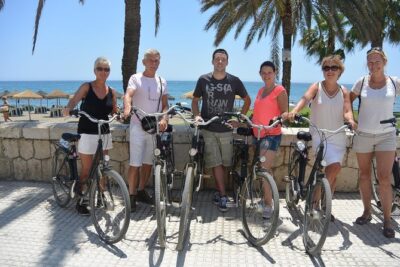 ★ 5.0Highlights and Treasures of Malaga City Bike TourFrom $37119 reviews
Other lists this tour appears in