
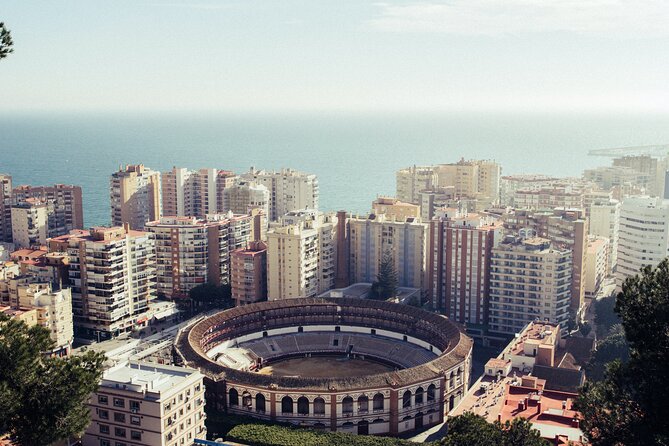
Review · MáLAGA ESCAPE GAMES & TREASURE HUNTS
Sightseeing Quest Experience in Malaga
Malaga turns into a game board when you follow clues on your phone. This self-guided city exploration quest lets you roam at your own pace, and I like that it blends sightseeing with a story you can actually follow. I also like the value: it’s priced around $14 and doesn’t require paid entry tickets since the challenges are done outside.
The only real catch is simple: it’s puzzle-led walking, so you’ll want decent comfort on your feet and a phone with enough battery to keep moving through the route.
In This Review
- Key things to know before you play
- XIX-Century Malaga in Your Pocket: how the quest really feels
- Starting at Plaza de la Marina: your clue-and-walk launch point
- Small planning tip
- City-center landmarks on your terms: Andersen, Marqués de Larios, and the classic streets
- Antigua Casa de Guardia to Calle Atarazanas: where the puzzles meet older texture
- What you’ll get out of these mid-route stops
- Plaza rhythm: Felix Saenz, Constitución, and Plaza del Obispo
- Why plazas work for this kind of experience
- Church of Santiago, Plaza de la Merced, and Calle Zegrí: classic, then pleasantly offbeat
- The “slow down” effect (and why it matters)
- Alcazaba La Fortaleza de Velez Malaga: finishing with the city at your feet
- Comfort note
- Price and value: why about $14 can feel like more than a cheap gimmick
- Who gets the best deal
- Who should book this Malaga quest (and who might skip it)
- Practical tips so the quest stays fun
- Should you book this Sightseeing Quest Experience in Malaga?
Key things to know before you play
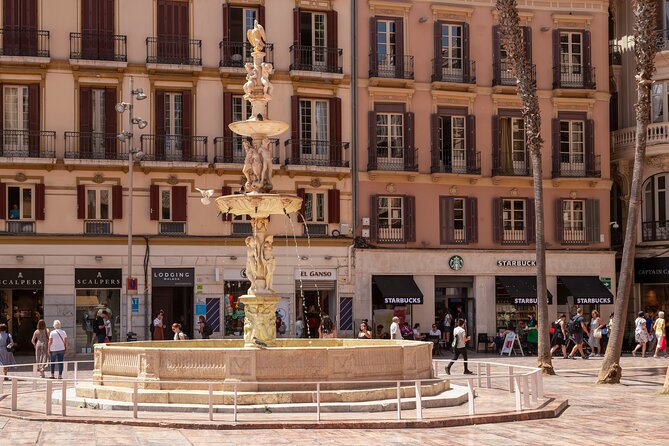
- Phone-guided clues: directions come directly to your screen, so you’re not stuck guessing your next turn.
- XIX-century story theme: the plot is set in a hierarchic Málaga, with strained relationships between locals and gipsy communities.
- All-outdoor route: open air and designed to keep you away from crowd bottlenecks.
- No tour guide needed: you get the freedom of a self-guided experience without losing structure.
- Plenty of pause time: each stop is built for short browsing, then you restart the next clue.
- Group-friendly format: works well for groups sharing one phone (and it’s set up as a private activity for your group).
Crack the city's clues, more games
- Málaga: Private Sightseeing Treasure Hunt★ 5.0 · 144 reviews
- Malaga city game: Operation Mindfall★ 5.0 · 111 reviews
- Malaga: Bachelorette Party Treasure Hunt★ 4.7 · 35 reviews
- Crime Challenge Málaga – Your Sightseeing Investigation★ 5.0 · 22 reviews
XIX-Century Malaga in Your Pocket: how the quest really feels

This isn’t a hop-on hop-off tour. It’s closer to an outdoor escape game with sightseeing stops, where the story gives you a reason to look closely at the city instead of just passing through it.
After you book, you’ll get an email with instructions to download and play the quest on your phone, using the Questo app. The game runs with full availability 24/7, so you can choose a time that fits your day instead of forcing your schedule around a fixed guided departure.
The storyline is the big emotional hook. It takes you back to a XIX-century Málaga where society was highly hierarchic and relations between locals and gipsy communities were described as stranded and separated. As you solve challenges, the narrative unfolds and the app feeds you exact directions to the next place. That “next instruction” rhythm is what makes it work: you always know what to do next, but you still choose how long to linger.
If you like your travel with a brain-on component—maps, clues, mini-decisions—this format clicks fast. If you prefer passive sightseeing with no puzzles at all, you might find the mental part a bit distracting.
Starting at Plaza de la Marina: your clue-and-walk launch point
You begin at Pl. de la Marina, 1 in Málaga’s Centro district. That’s a smart start location because it puts you right in the thick of the city-center energy, near major pedestrian corridors and easy transit access.
The first move is puzzle-based. You reach Plaza de la Marina by following a clue and solving an in-game puzzle. Once there, the game lets you pause as long as you want before prompting you to continue to the next stop.
In practice, this “get there via clue, then stay put” setup is great for travel stress. You’re not wasting time figuring out route details before the fun begins. And because the route is self-guided, you’re free to reset if you need a quick bathroom break or want to step into a nearby café for a drink before moving on.
Small planning tip
Before you start, take a moment to ensure your phone battery is healthy and your sound/vibration settings are how you like them. The entire experience runs through the mobile app, and you’ll want it to stay reliable.
- Malaga: Catamaran Sailing Trip with Sunset Option
★ 4.4 · 8,613 reviews - Málaga: Alcazaba and Roman Theatre Guided Tour With Entry
★ 4.8 · 5,792 reviews - Ronda and Setenil Tour with Free Time and Map from Málaga
★ 4.8 · 5,344 reviews
City-center landmarks on your terms: Andersen, Marqués de Larios, and the classic streets
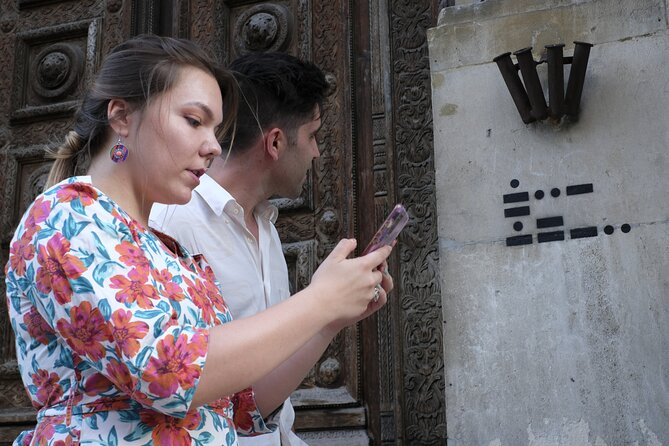
After Plaza de la Marina, the quest guides you to the Statue of Hans Christian Andersen. Again, you’ll reach it through a clue and puzzle, and then you can spend as much time as you want there before the app nudges you onward. This stop is a nice example of how the quest teaches you to slow down: you don’t just walk past a landmark; you look at it with purpose.
Next comes Calle Marqués de Larios, one of Málaga’s best-known shopping streets. This is where the quest becomes a stroll you control. You’ll follow a clue to the street, then spend time on-site while you work through whatever the game asks you to notice.
Why this works well: these are “showpiece” areas that most visitors see anyway, so the quest doesn’t feel like you’re doing something random in an unfamiliar part of town. Instead, it helps you experience familiar streets with fresh attention.
A possible drawback: if you’re traveling during peak hours, these central streets can be busy—although the quest is designed as open air and to help you avoid the worst crowding moments. You can reduce friction by choosing a start time that isn’t right in the middle of the lunch rush or late-afternoon dinner surge.
Antigua Casa de Guardia to Calle Atarazanas: where the puzzles meet older texture

The quest then steers you toward Antigua Casa de Guardia. The in-game format stays the same: follow the clue, solve the puzzle, arrive, then take as long as you want before continuing. This stop tends to feel different from the more “main street” vibe because it invites you to pay attention to the city’s layers.
From there, you’ll move to Calle Atarazanas. This street is one of those that helps you experience Málaga beyond the postcards. The game prompts keep you moving, but the short on-site pauses mean you can also look around—shopfront details, street bends, how people actually walk this neighborhood.
What you’ll get out of these mid-route stops
The best value of the quest is not that it forces you to see 12 places quickly. It’s that it makes you stop at each place long enough to notice what makes it distinct. These segments—especially the ones that are less obviously “big attraction”—tend to create the most memorable moments because you’re not just checking boxes.
Plaza rhythm: Felix Saenz, Constitución, and Plaza del Obispo
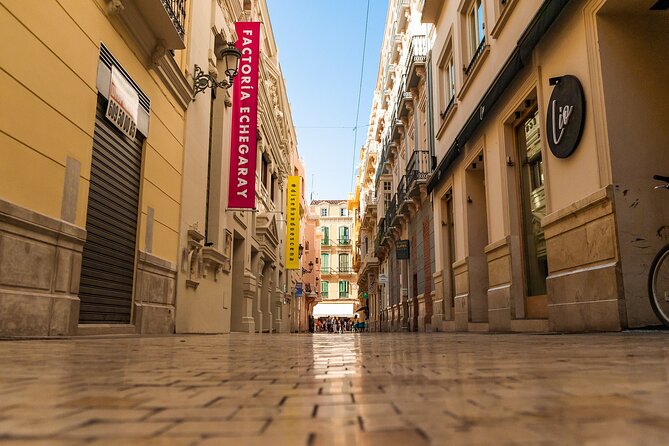
Then the quest enters a plaza-heavy sequence, which is often the sweet spot for game-style sightseeing. Plazas give you space to pause, look, and reset your brain before continuing.
You’ll reach Plaza de Felix Saenz, where you can spend extra time before the next clue. From there, you’ll go to Plaza de la Constitución. This is the kind of central square that feels like a natural pause point in any Málaga day, whether you’re on a guided tour or just wandering.
Next is Plaza del Obispo. By the time you arrive here, you’ve already walked enough that you’ll appreciate the game’s “stay as long as you want” instruction. It helps you avoid the usual problem of self-guided tours: either you rush too much or you drift without structure. The quest gives you structure, but not a hard timer that makes you feel chased.
Why plazas work for this kind of experience
Plazas act like navigation anchors. Even if you lose track for a second, the location itself helps you orient. And because you’re outdoors, it’s easy to keep momentum without getting tangled in inside-venue logistics.
Church of Santiago, Plaza de la Merced, and Calle Zegrí: classic, then pleasantly offbeat
After Plaza del Obispo, the quest guides you to Church of Santiago. As with the other stops, you’re following clues and puzzles, and the activities are carried out outside the attraction rather than requiring paid entry tickets.
Next comes Plaza de la Merced. This is one of those places that feels instantly familiar to people who’ve spent any time in southern Spanish cities—good walking energy, easy to linger, and perfect for that “pause and figure out the next clue” moment.
Then the route includes Calle Zegrí, which shifts you again into side-street mode. This is where the quest’s design tends to shine: it nudges you away from only the biggest names and into smaller streets that can feel more real.
The “slow down” effect (and why it matters)
You’ll notice a pattern: the quest doesn’t just move you forward; it gives you permission to linger. That small design choice changes the experience. You’re not sprinting. You’re observing.
And because the game includes challenges tied to each stop, you’re likely to remember what you saw. That’s the real difference between a checklist tour and a quest.
Alcazaba La Fortaleza de Velez Malaga: finishing with the city at your feet
Your final stop is Alcazaba La Fortaleza de Velez Malaga. The quest keeps the same structure right up to the end: follow the clue, solve the puzzle, then spend time on-site.
Your walk ends near C/ Alcazabilla, 2 (Centro). Ending close to an historic fortress setting gives the whole experience a satisfying arc, because you finish with big visual impact rather than a dead-end street corner.
Even if you don’t go inside any attractions (the game is conducted outside), finishing near the Alcazaba area helps you “land” mentally. You feel like you’ve closed the loop on your day’s walking.
Comfort note
Fortress zones can involve uneven ground or gentle slopes. The quest is open air and designed for most participants, but if you have mobility limits, plan your footwear carefully and expect some uneven walking.
Price and value: why about $14 can feel like more than a cheap gimmick
At $14, this Malaga quest is priced to be accessible, especially compared with many guided tours. The big value driver is what you don’t pay for: there are no entry tickets built into the experience because the challenges happen outside attractions.
You’re also not “locked” into one fixed departure time since the game is available 24/7. That flexibility can be worth real money in vacation time, because you can schedule it around your meals, the weather, and other plans.
The experience also has group flexibility. It’s private for your group, meaning you won’t be mixed into strangers’ energy. And because the app can be shared (several people can use one phone), it works nicely for friends and families who want to experience it together without each person needing their own device.
Who gets the best deal
This is especially good if you want:
- a budget-friendly way to cover many sights in one go
- a structured route that still leaves room to wander
- something fun for a mixed group where not everyone wants the same kind of museum visit
Who should book this Malaga quest (and who might skip it)
Book it if you like an active sightseeing day. You’ll walk, solve puzzles, and use the city itself as your game board. It’s a great fit for groups because it creates shared moments around each clue, like mini competitions without needing a guide to manage the group.
I’d also recommend it for people who like discovering lesser-known angles of well-known places. The route mixes major recognizable areas with quieter street segments. That balance matters in a city where it’s easy to only chase the top names.
Skip it if you want purely restful sightseeing. If you hate phone-based navigation, or you’d rather spend your time sitting in cafés than reading prompts, this probably won’t be your favorite use of a vacation afternoon.
If you’re traveling with kids, it could work well as long as your group is comfortable with the phone game and can handle a self-guided format. The experience is labeled as suitable for most travelers, but puzzles always bring a little variability in pace.
Practical tips so the quest stays fun
Here are a few things that keep the experience smooth:
- Start with a full charge: the route depends on your phone.
- Pick the right pace: you can spend as much time as you wish at each stop before moving on.
- Expect short segments: each stop is designed around quick puzzle-driven moments and brief on-site time, so the walking adds up.
- Dress for open air walking: it’s outdoors, so plan for sun, wind, or cooler evening temperatures.
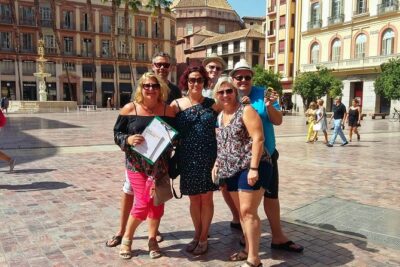
One more helpful observation from real-world use: a group of six on a girls trip played across a multi-day schedule. That tells me the game format adapts well to repeated visits—you can slot it into a day without needing to do everything in one exhausting session.
Should you book this Sightseeing Quest Experience in Malaga?
If you want a low-cost, structured, self-guided way to see Malaga’s key streets plus calmer corners, this is an easy yes. The price-to-effort ratio is strong because you’re paying for the game and the route design, not for ticketed attractions.
The decision comes down to one question: do you enjoy phone-led puzzles and walking between stops? If that sounds like your kind of travel, book it. If you’d rather rely on a guide and skip problem-solving, choose a traditional walking tour instead.
More Málaga Trips, Reviewed
- Malaga: Catamaran Sailing Trip with Sunset Option
★ 4.4 · 8,613 reviews - Málaga: Alcazaba and Roman Theatre Guided Tour With Entry
★ 4.8 · 5,792 reviews - Ronda and Setenil Tour with Free Time and Map from Málaga
★ 4.8 · 5,344 reviews - From Málaga: Caminito del Rey Day Trip & Guided Tour
★ 4.8 · 4,683 reviews - From Malaga and Costa del Sol: Gibraltar Tour
★ 4.4 · 4,483 reviews - Malaga: Teatro Flamenco Malaga Live Flamenco Show
★ 4.7 · 4,254 reviews
Puzzling Out the City
- Málaga: Private Sightseeing Treasure Hunt
★ 4.8 · 297 reviews - Málaga: Private Sightseeing Treasure Hunt
★ 5.0 · 144 reviews - Malaga city game: Operation Mindfall
★ 5.0 · 111 reviews - Malaga: Bachelorette Party Treasure Hunt
★ 4.7 · 35 reviews - Crime Challenge Málaga – Your Sightseeing Investigation
★ 5.0 · 22 reviews - Málaga Crime Investigation Tour
★ 5.0 · 18 reviews
Fresh Off the Boat: Newly Reviewed Málaga Trips



Málaga Escape Games & Treasure Hunts, side by side.
 ★ 4.8Private Sightseeing Treasure HuntFrom $34297 reviews
★ 5.0Private Sightseeing Treasure HuntFrom $33144 reviews
★ 4.8Private Sightseeing Treasure HuntFrom $34297 reviews
★ 5.0Private Sightseeing Treasure HuntFrom $33144 reviews
 ★ 5.0Malaga city game: Operation MindfallFrom $24111 reviews
 ★ 4.7Bachelorette Party Treasure HuntFrom $4135 reviews
 ★ 5.0Crime Challenge Málaga – Your Sightseeing InvestigationFrom $4522 reviews
 ★ 5.0Málaga Crime Investigation TourFrom $4218 reviews
 ★ 4.9Outdoor Escape Game, Magic Portal (For Kids)From $2310 reviews
 ★ 4.5Malaga Scavenger Hunt and Sights Self-Guided TourFrom $109 reviews
Other lists this tour appears in