
Review · MáLAGA ART MUSEUMS
Málaga: Carmen Thyssen Museum Ticket
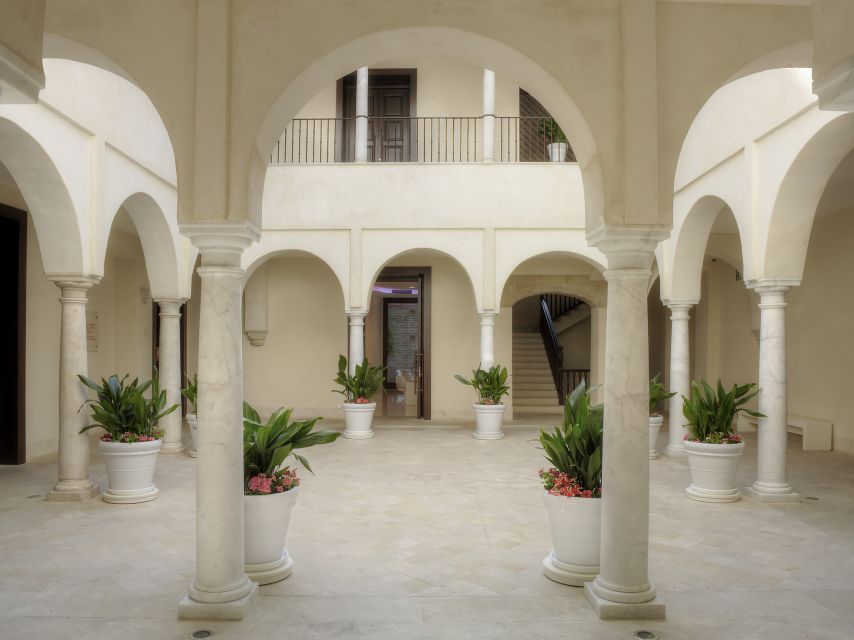
Art you can pair with real Renaissance rooms. Step into the restored Palacio de Villalón in Málaga and you get 19th-century Spanish and Andalusian painting in a setting that was built over Roman remains and shaped by the old Moorish quarter. I particularly like the Carmen Thyssen-Bornemisza collection for how clearly it organizes Spanish painting genres, especially with Andalusia front and center, and I also love that you wander through a palace: two floors, a central courtyard, arcaded galleries, and those carved wooden ceilings and fretwork in the main rooms. One thing to consider: cameras, phones in galleries, and even video are not allowed, so you’ll enjoy it with your eyes only.
You can do the visit fully on your own, or add a guide for context, and the included audioguide helps you pace the experience without rushing. It’s a solid one-day ticket if you want something more specific than the biggest “must-see” museums.
In This Review
- Key highlights worth planning around
- A 16th-Century Palace Meets 19th-Century Spanish Painting
- Getting Oriented at the Palacio de Villalón (Without Getting Lost)
- What’s Actually in the Collection: Carmen Thyssen-Bornemisza Core
- Temporary Exhibitions and How They Can Change Your Day
- Precieuz, Romantic Paintings, and Other Styles You’ll Start Spotting
- Audioguide: Included, and Actually Useful in This Layout
- Palace Rules You Need to Know Before You Go
- Doing It Self-Guided vs Adding a Guide
- Price and Value: Is $14 Worth It?
- Who Should Book This Museum Ticket (and Who Might Skip)
- A Few Smart Visit Tips That Make the Most of It
- Should You Book the Museo Carmen Thyssen Ticket?
- FAQ
- Where is the Museo Carmen Thyssen in Málaga?
- What is the ticket price?
- How long is the ticket valid?
- Is an audioguide included?
- What languages are available for the audioguide?
- Can I visit on my own, or do I need a guide?
- Are cameras and video allowed?
- Are phones allowed inside the galleries?
- Are there rules about bags and luggage?
- Is the museum wheelchair accessible?
- FAQ
- Can I bring food and drinks?
- Are pets allowed?
- Is there free cancellation?
- Does booking require full payment right away?
Key highlights worth planning around
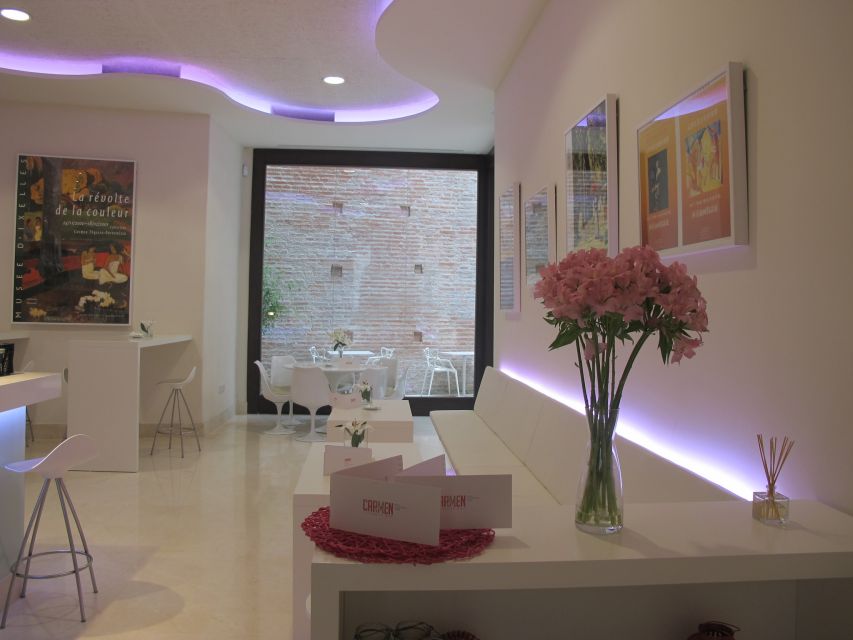
- Two floors around a central courtyard means easy movement and natural pauses between rooms
- Palacio de Villalón architecture: Renaissance layout, arcaded galleries, carved wooden ceilings, and period Spanish paintings in key rooms
- Carmen Thyssen-Bornemisza collection focus on 19th-century Spanish painting genres with special attention on Andalusia
- Art styles you’ll recognize fast through Precieuz, Naturalist, and Romantic-era examples
- Temporary exhibitions may change your visit depending on what’s on during your day
Rainy-hour galleries, a few more tickets
- Malaga: Picasso Museum Guided Tour with Skip-the-Line Ticket★ 4.8 · 485 reviews
- Skip the Line: Malaga Automobile and Fashion Museum Entrance Ticket★ 4.5 · 379 reviews
- Malaga: Tour of Malagueta Bullring & Immersive Exhibition★ 4.7 · 271 reviews
- Málaga: Carmen Thyssen Museum Ticket★ 4.6 · 245 reviews
A 16th-Century Palace Meets 19th-Century Spanish Painting
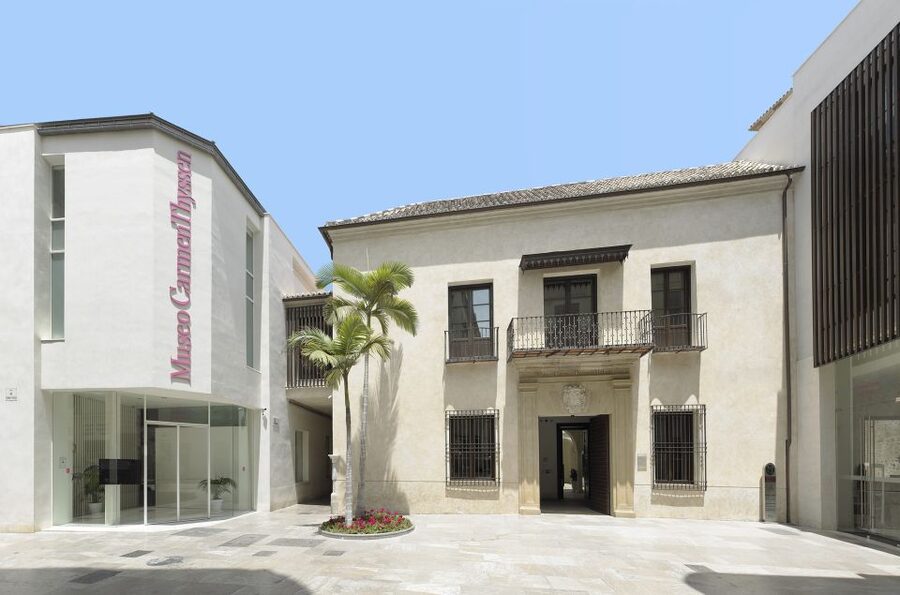
The Museo Carmen Thyssen in Málaga isn’t just a place to look at paintings. The building is part of the story, and it’s one of the reasons this ticket feels like more than a standard museum entry.
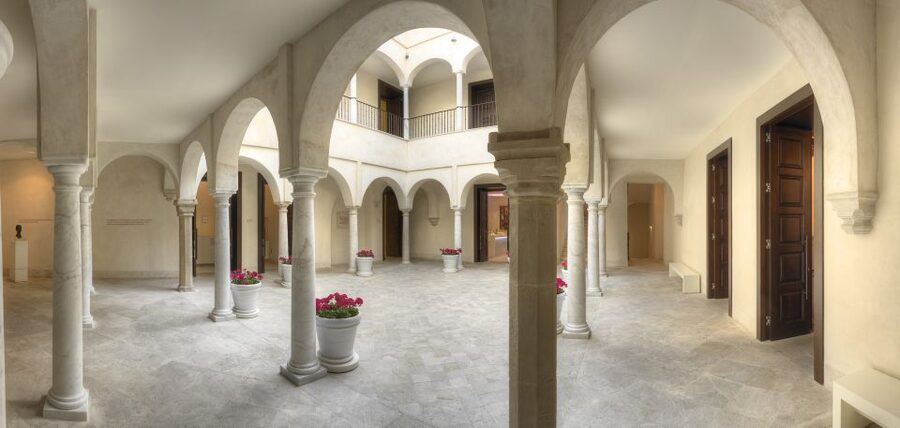
The museum is inside the 16th-century Palacio de Villalón, a key example of Málaga’s Renaissance architecture. The palace sits on top of older layers too: it was built over the remains of the Roman city, in what used to be the old Moorish quarter. When the museum was restored, the emphasis was on recovering the palace’s original layout, while adding newer parts that coexist in a low-key way rather than turning the whole place into a modern mash-up.
For you, that means your visit alternates between “art time” and “building time.” The arcaded galleries and the central courtyard make it feel navigable even if you’re just wandering. And because you’re moving through real historic rooms, you’re not only studying paintings—you’re also getting a sense of how the museum wants you to slow down and look carefully.
My favorite part is how the museum balances two worlds: Renaissance rooms with period interior details, plus 19th-century Spanish and Andalusian works that feel perfectly at home in a setting like this. If you enjoy architecture even a little, the palace alone is worth showing up.
Getting Oriented at the Palacio de Villalón (Without Getting Lost)
Your starting point is the Carmen Thyssen Museum at Fundación Palacio de Villalón, C/ Compañía 10, 29008 Málaga. The experience ends back at the meeting point, so plan to return to the same place when you finish.
Once inside, the layout is designed to help you move. The palace’s galleries are arranged over two floors around a central courtyard. Expect arcaded galleries that connect rooms in a way that keeps you from feeling trapped in one long corridor. The central courtyard works like a built-in reset button: you’ll see it often, and it naturally breaks your attention so you can re-focus on the next group of paintings.
As you go, pay attention to the carved wooden ceilings and the fretwork in the main rooms. The museum places some 17th-century Spanish paintings in those principal rooms, so even if your main interest is 19th-century art, you’ll get a quick bonus taste of earlier works in a dramatic setting.
One practical tip: since captions in many museums can be small and the rules are strict about phones (more on that later), you’ll enjoy the visit more if you treat your audioguide as your main reading-and-context tool. It’s included, and it helps you keep the pace you want.
What’s Actually in the Collection: Carmen Thyssen-Bornemisza Core
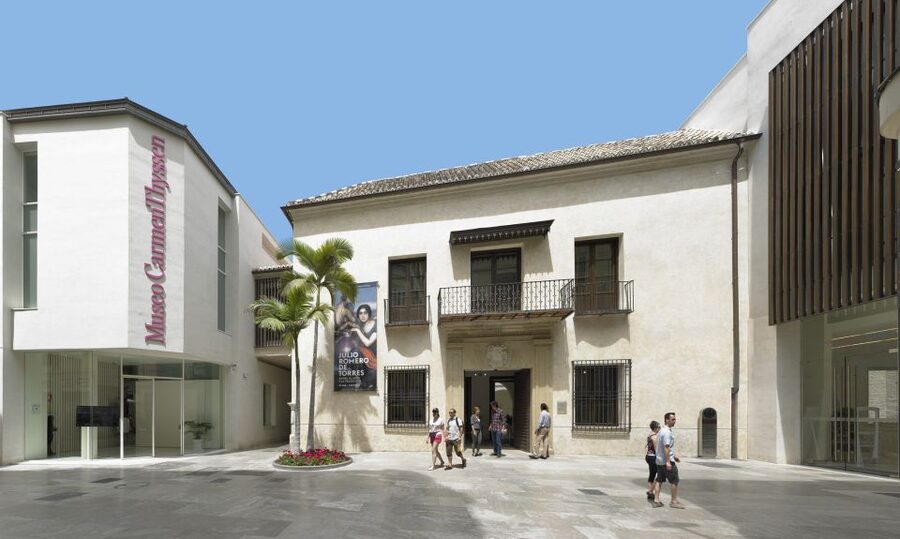
The museum’s heart is the Carmen Thyssen-Bornemisza collection. The best way to think about it: you’re not seeing a random mix. You’re seeing a curated sweep of 19th-century Spanish painting genres, with a clear spotlight on Andalusia.
That focus matters. Málaga is in Andalusia, so the connection feels real rather than touristy. When the paintings lean toward regional themes, it’s easier to understand why the museum’s collection has such a strong Andalusian identity.
Here are the art directions you’re likely to recognize as you move through galleries:
- You’ll see Old Masters in the Carmen Thyssen-Bornemisza collection, including artists tied to Spain’s big painting tradition.
- You’ll encounter Precieuz style works (a style name you might not know before you arrive, but you’ll understand once you see the emphasis on refinement and detail).
- You’ll also find Naturalist and Romantic examples, including painted scenes by artists such as Sánchez-Perrier and Ortega.
A useful way to enjoy this collection is to stop thinking “which artist is famous” and start thinking “what kind of painting am I looking at.” The museum setup encourages genre awareness. You can literally feel the shift from one approach to another as you turn corners.
If you’ve mostly seen Spanish art through the biggest household-name names elsewhere, this museum can broaden your sense of the range—especially in how regional subjects and styles show up across decades.
Worth a look before you lock in this Málaga day out:
- Malaga: Hammam Al Ándalus Entry Ticket with Massage
★ 4.7 · 2,498 reviews - Málaga: 3-Hour Complete Walking Tour with Tickets
★ 4.5 · 976 reviews - Málaga: Museo del Automóvil y la Moda Ticket
★ 4.8 · 584 reviews
Temporary Exhibitions and How They Can Change Your Day
Your ticket gives you access to the permanent collection and/or temporary exhibitions. In other words, you’re not forced into a single track. You can choose to focus, or you can go broad.
Temporary exhibitions are the biggest wildcard. One recent example mentioned in comments was a special showing of Sorolla works. If you visit on a day when a temporary show is on, it can add a different mood to your museum time—often with more emotional immediacy or a fresher hook into Spanish painting.
How to plan around this without stress:
- If your goal is the palace and the main collection, you can still enjoy the visit even if the temporary exhibition doesn’t match your interests.
- If you love variety, prioritize at least a portion of the temporary spaces, since they’re designed to make repeat visits tempting.
Because your ticket is valid for one day, you can pick the day that fits your schedule and let whatever is on at that time shape the experience.
Precieuz, Romantic Paintings, and Other Styles You’ll Start Spotting
This museum can teach you how to see. Not in a classroom way—more like you start noticing patterns that repeat across rooms.
One style worth your attention is Precieuz. Even if the label is new, the look is usually recognizable: there’s an emphasis on refinement, careful detail, and a polished feel to the subject matter. Once you get your eye on it, you’ll likely find yourself catching it again as you move from one gallery to the next.
Then there’s the Romantic side—think of paintings with more dramatic mood and storytelling focus. The highlights specifically mention Romantic-era artists such as Sánchez-Perrier and Ortega, and those names are useful anchors. You can look for the traits you associate with Romantic art: emotion, atmosphere, and often a more expressive approach than earlier styles.
You’ll also see Naturalist examples, which tend to pull you toward realism and observation. The shift between Precieuz refinement, Romantic drama, and Naturalist focus is one of the reasons this collection feels educational in a satisfying way. You’re watching art change through time, not just memorizing who painted what.
Audioguide: Included, and Actually Useful in This Layout
The ticket includes an audioguide, and you can get it in multiple languages: Spanish, English, French, German, and Italian. That matters because this museum has a building-with-details approach: the palace has visual features that can be easy to miss if you only half-listen to descriptions.
Since mobile phones are not allowed in the galleries, your audioguide becomes your main companion. You’re free to listen at your own pace without doing the stop-start scroll behavior that drains attention in many museums.
I also like audioguides here because the palace layout encourages you to move between spaces. You can pause, listen, and then move on when your brain has had enough time on one room of art.
Quick practical move: if there’s a room you care about most, give it a longer listen. That’s where the collection’s genre logic makes the most sense.
Palace Rules You Need to Know Before You Go
Museums love rules. This one has a few that directly affect how you experience it, so it’s worth planning for them.
Not allowed:
- Cameras
- Video recording
- Smoking
- Food and drinks
- Luggage or large bags (bags over 80 x 50 cm are not allowed)
- Swimwear
- Cellphones in the galleries (phones are not allowed in galleries)
- Anything that might damage artworks
- Touching artworks (please do not touch the works of art)
Also:
- Animals other than guide dogs are prohibited.
- Wear suitable clothing for a museum visit.
- Please do not touch the works of art.
What this means for you in real terms: you should pack light and plan for no photo-documenting. If you’re the type who likes to take a picture of every room, you’ll need to adjust. Instead, treat the visit like a memory walk. You can still enjoy it—just without the camera “training wheels.”
Doing It Self-Guided vs Adding a Guide
This ticket works either way. You can tour on your own, or you can go with a guide for added information.
Self-guided works well here because:
- The palace layout is easy enough to navigate.
- You already have an included audioguide.
- You can decide whether to focus on the permanent collection, temporary galleries, or both.
A guide can be useful if you want someone to connect the dots fast—how styles evolved, what artists represent in Spain’s painting development, and how the museum’s palace spaces relate to what you’re seeing.
I’d choose the guide option if you’re the type who likes clear storytelling and you get more from explanations than from labels.
If you’re more independent, self-guided plus audioguide is a good match. You can pause when a detail grabs you, then move on when you’ve had enough.
Price and Value: Is $14 Worth It?
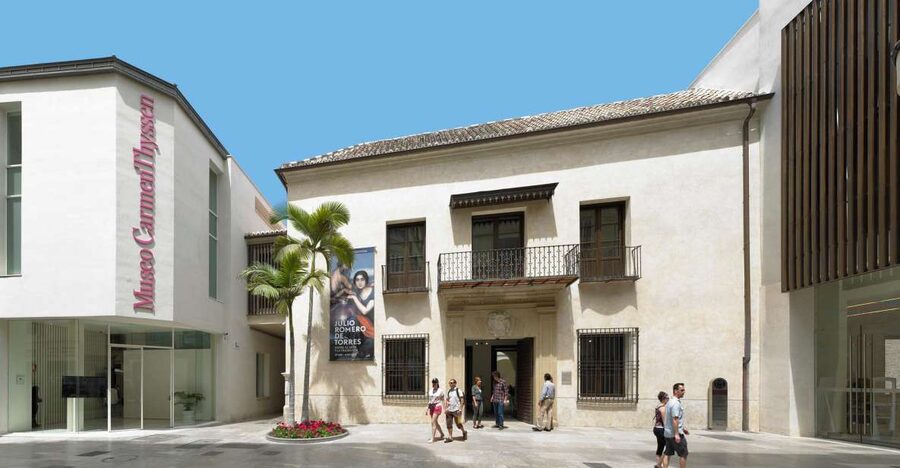
At $14 per person, this ticket sits in the category of “feels reasonable if you actually use it well.” Here’s why.
You’re paying for two things at once:
- Access to the Museo Carmen Thyssen permanent collection and temporary exhibitions (depending on what you choose to see).
- Access to a restored palace setting, including period architectural details and historic room features.
Even if you only care about the art, the palace adds value because it changes how the artworks feel. And even if you’re more architecture-inclined, the museum’s collection gives you a structured reason to stay rather than treating the building like a quick photo stop.
If you’re visiting with kids, check the under-18 policy. One comment suggested tickets are free under 18, but the safe move is to confirm based on the museum’s current rules before you count on it.
Also, remember that the ticket is valid 1 day. That flexibility helps if your Málaga plans shift.
Who Should Book This Museum Ticket (and Who Might Skip)
I’d book this if you:
- Like 19th-century Spanish and Andalusian art and want it in a focused collection.
- Care about museums in historic buildings, not just the artwork.
- Want a visit where architecture and paintings feed each other.
You might hesitate if:
- You want lots of hands-on interaction (this is a looking museum, with strict rules).
- You rely heavily on taking photos in galleries. Cameras and phone use in galleries are not allowed.
- You’re expecting a huge modern display with interactive tech. This is more traditional: rooms, paintings, and a palace layout.
For couples, art lovers, and anyone who wants a calmer cultural stop between city walks, it’s a strong choice.
A Few Smart Visit Tips That Make the Most of It
- Since cellphones are not allowed in galleries, plan to use the audioguide instead of switching to quick photo-based memory.
- If you read captions often, go slowly in rooms where labels might be hard to spot from standing height. A comment mentioned text can be challenging to read in some galleries, so be prepared for visual effort.
- Prioritize the rooms that match your interest first (Precieuz, Romantic, or Naturalist) so your visit still feels satisfying even if time runs short.
- If there’s a temporary show running that day, it can add an extra reason to go. One example mentioned was Sorolla, but the key is: check what’s on when you book.
Should You Book the Museo Carmen Thyssen Ticket?
Yes—if you want a museum that mixes serious Spanish painting with a real historic palace setting. It’s good value for the price, and the included audioguide plus the two-floor palace layout make it easy to enjoy without feeling lost.
Skip it only if you strongly need in-gallery phone use, heavy photo-taking, or you’re uninterested in 19th-century Spanish and Andalusian art. Otherwise, this is one of those Málaga experiences where you’ll come away seeing both the paintings and the building a little differently.
FAQ
Where is the Museo Carmen Thyssen in Málaga?
It’s at Fundación Palacio de Villalón, C/ Compañía 10, 29008 Málaga. Your visit starts there and ends back at the same meeting point.
What is the ticket price?
The price is $14 per person.
How long is the ticket valid?
Your ticket is valid for 1 day. Starting times depend on availability.
Is an audioguide included?
Yes. The entrance includes an audioguide.
What languages are available for the audioguide?
The audioguide is available in Spanish, English, French, German, and Italian.
Can I visit on my own, or do I need a guide?
You can tour on your own, and you also have the option of visiting with a guide for added information.
Are cameras and video allowed?
No. Cameras and video recording are not allowed.
Are phones allowed inside the galleries?
No. Mobile phones are not allowed in the galleries.
Are there rules about bags and luggage?
Yes. Luggage or large bags are not allowed, and bags over 80 x 50 centimeters are not permitted.
Is the museum wheelchair accessible?
Yes, the activity is listed as wheelchair accessible.
FAQ
Can I bring food and drinks?
No. Food and drinks are not allowed.
Are pets allowed?
Only guide dogs are allowed. Other animals are prohibited.
Is there free cancellation?
Yes. You can cancel up to 24 hours in advance for a full refund.
Does booking require full payment right away?
You can reserve now & pay later, meaning you can book your spot and pay nothing today.
Entry Sorted in Advance
- Malaga: Hammam Al Ándalus Entry Ticket with Massage
★ 4.7 · 2,498 reviews - Málaga: 3-Hour Complete Walking Tour with Tickets
★ 4.5 · 976 reviews - Málaga: Museo del Automóvil y la Moda Ticket
★ 4.8 · 584 reviews - From Malaga: Alhambra Guided Tour with Entry Tickets
★ 4.4 · 563 reviews - From Malaga: Seville Day Trip with Real Alcázar Tickets
★ 4.6 · 528 reviews - Chamber of Secrets Skip the Line Ticket
★ 5.0 · 502 reviews
More Málaga Trips, Reviewed
- Malaga: Catamaran Sailing Trip with Sunset Option
★ 4.4 · 8,613 reviews - Málaga: Alcazaba and Roman Theatre Guided Tour With Entry
★ 4.8 · 5,792 reviews - Ronda and Setenil Tour with Free Time and Map from Málaga
★ 4.8 · 5,344 reviews - From Málaga: Caminito del Rey Day Trip & Guided Tour
★ 4.8 · 4,683 reviews - From Malaga and Costa del Sol: Gibraltar Tour
★ 4.4 · 4,483 reviews - Malaga: Teatro Flamenco Malaga Live Flamenco Show
★ 4.7 · 4,254 reviews
Málaga's Galleries, a Few More
- Málaga: Museo del Automóvil y la Moda Ticket
★ 4.8 · 584 reviews - Malaga: Picasso Museum Guided Tour with Skip-the-Line Ticket
★ 4.8 · 485 reviews - Skip the Line: Malaga Automobile and Fashion Museum Entrance Ticket
★ 4.5 · 379 reviews - Malaga: Tour of Malagueta Bullring & Immersive Exhibition
★ 4.7 · 271 reviews - Malaga: OXO Video Game Museum Ticket Entry
★ 4.7 · 178 reviews - Málaga: Picasso Birthplace Museum Ticket & City Audio Guide
★ 4.1 · 158 reviews
Fresh Off the Boat: Newly Reviewed Málaga Trips


Málaga Art Museums, side by side.
 ★ 4.8Museo del Automóvil y la Moda TicketFrom $14584 reviews
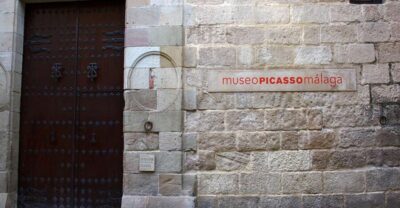 ★ 4.8Picasso Museum Guided Tour with Skip-the-Line TicketFrom $41485 reviews
 ★ 4.5Skip the Line: Malaga Automobile and Fashion Museum Entrance TicketFrom $14379 reviews
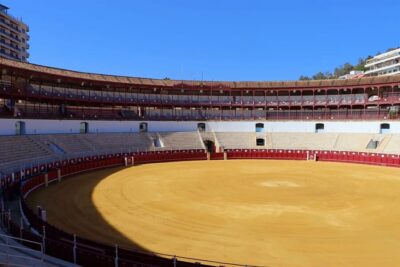 ★ 4.7Tour of Malagueta Bullring & Immersive ExhibitionFrom $16271 reviews
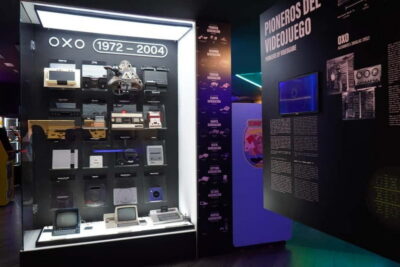 ★ 4.7OXO Video Game Museum Ticket EntryFrom $17178 reviews
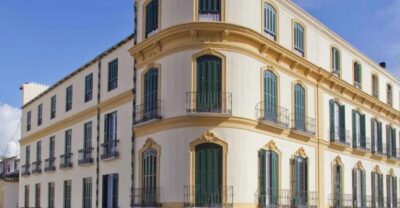 ★ 4.1Picasso Birthplace Museum Ticket & City Audio GuideFrom $11158 reviews
 ★ 4.5Museo Carmen Thyssen de Malaga Entrance TicketFrom $14136 reviews
 ★ 4.5Visit Oil Mill Museum and Olive Oil Tasting in RondaFrom $30105 reviews
Other lists this tour appears in