
Review · ALCAZABA & ROMAN THEATRE
Málaga: Roman Theatre and Alcazaba Guided Tour
Málaga’s ruins climb higher than you think. This 90-minute guided tour links the Teatro Romano and the best-preserved Alcazaba experience in the city, with your guide explaining how Málaga changed from Augustus’s era to the later Reconquista. I love the Roman Theatre story being made clear and human, and I love the ramparts-and-panoramas payoff from the citadel hill. One drawback: it’s uphill and not a good fit if you have back issues or mobility limitations.
I also like the small-touch details your guide brings in—many guides (like Dani, Maria, and Belén) use photos of how the fortress and theater looked in the past, and they keep the pace lively with questions and jokes. Since you start in the glass pyramid on Calle Alcazabilla (look for the orange umbrella), you’ll get oriented fast and you can move through the sites without wasting time in lines.
In This Review
- Key things to know before you go
- Start at the glass pyramid, then skip straight into the story
- Teatro Romano: the Roman Republic story you can actually picture
- Alcazaba: Spain’s best-preserved fortress feeling personal
- Ramparts and panoramic views: where the whole defense plan clicks
- The Reconquista chapter: why the ruins tell more than one story
- Price and value: why $17 can feel like a steal here
- What to wear, what to do, and how to get the best guide experience
- Is this tour right for you?
- Should you book the Málaga Roman Theatre and Alcazaba guided tour?
- FAQ
- Where is the meeting point?
- How long is the tour?
- What does the ticket include?
- Do I need to buy separate tickets for the sites?
- What languages are available?
- What should I bring?
- Is this tour suitable for people with mobility issues or wheelchairs?
- Can I bring a pet?
- FAQ
- What if I arrive late?
- Is free cancellation available?
- Can I reserve now and pay later?
Key things to know before you go
- Roman Theatre + Alcazaba in 90 minutes keeps the time tight and the story connected
- Skip-the-line entry uses a separate entrance so you start seeing things sooner
- Citadel ramparts give you hilltop views plus a real sense of defense and design
- Puerta del Arco de Cristo area and the Patio de Armas add variety beyond straight ruin-walking
- Local, professional guides often add humor and visuals (Dani, Maria, Belén, and others have stood out)
More of the old fortress and its Roman stage
- Alcazaba Malaga Guided Tour★ 5.0 · 1,457 reviews
- Málaga: Roman Theatre and Alcazaba Guided Tour★ 4.5 · 1,219 reviews
- Malaga Tour with Cathedral, Alcazaba and Roman Theatre★ 4.5 · 548 reviews
- Málaga: Cathedral, Alcazaba, Roman Theater Walking Tour★ 4.7 · 315 reviews
Start at the glass pyramid, then skip straight into the story
You meet at the glass pyramid at Pirámide de Cristal on Calle Alcazabilla. Find the orange umbrella and you’ll know you’re in the right place. From there, you go to the Roman Theatre and the Alcazaba on foot as one connected walk rather than two random stops.
Two practical things matter here. First: arrive on time. If you show up late, you may miss the visit and you won’t get a refund. Second: plan your shoes. Comfortable walking shoes are essential because you’ll be on uneven terrain and doing inclines as you move from the theatre up toward the citadel.
The tour is set up for speed and clarity: it includes entry to both sites and a separate entrance that helps you skip the line. That’s real value in a busy place like Málaga, because time matters when you’re only out for about 90 minutes total.
Teatro Romano: the Roman Republic story you can actually picture
The tour starts with the Roman Theatre (Teatro Romano) for about 40 minutes. This is where you learn how Málaga fit into Roman life and power, long before the city became what you see today. Your guide connects the setting to the Roman Republic and the reign of Augustus, who’s often described as the first emperor of the Roman Empire (from 27 BC to AD 14).
What I like about this stop is that a theatre is never just stone. It’s a technology for crowds—sound, sightlines, status, and public life all working together. With a good guide, you don’t just look at arches or rows of seating. You start to understand why it was built and what kind of gatherings it hosted.
You’ll also hear how the site didn’t stay frozen in one Roman moment. Buildings in old cities often get reused, repaired, and reinterpreted. The theatre is part of a larger timeline that leads you right up to the Alcazaba hill, where later rulers made their own changes to the same strategic ground.
If you get a guide with strong storytelling (some guides, including Dani, are known for interactive explanations and showing photos of earlier views), you’ll find yourself looking at details you’d otherwise ignore. The Roman Theatre becomes a clue about the city’s “why,” not just its “what.”
Alcazaba: Spain’s best-preserved fortress feeling personal
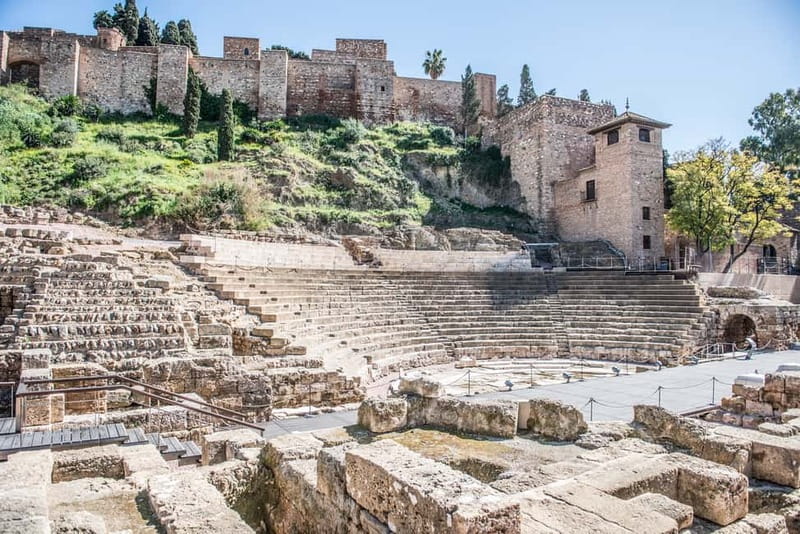
After the theatre, you move to the Alcazaba of Málaga for another 40 minutes. This is the part most people come for, and it’s easy to see why. The Alcazaba is often described as the best-preserved of its kind in Spain, and your guide will help you read the fortress like a map.
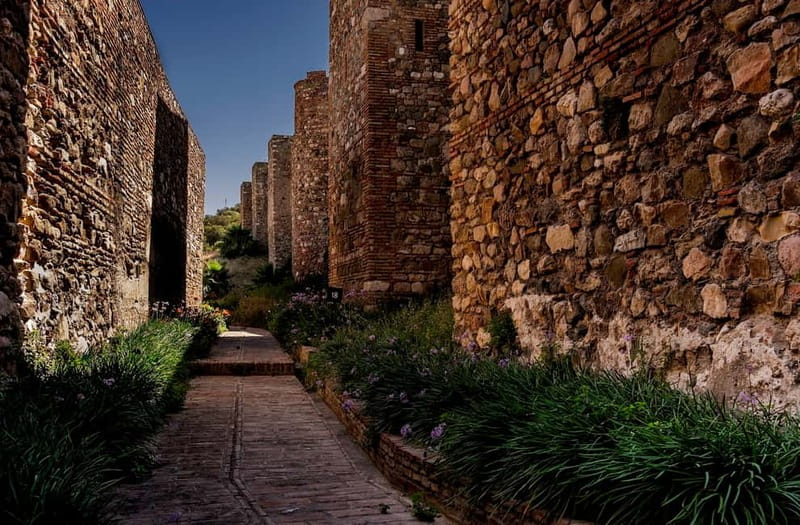
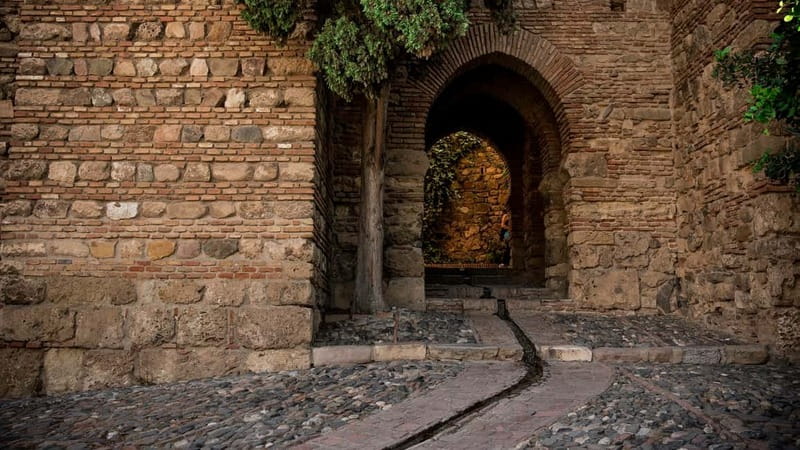
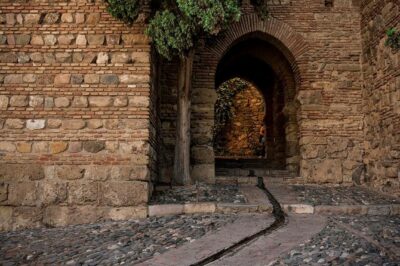
You enter the historic citadel and start working your way up toward the ramparts. Along the way, you pass through the Puerta del Arco de Cristo area, including the former chapel. It’s a reminder that fortress space wasn’t only about war. Over time, defensive zones and religious or ceremonial functions can overlap.
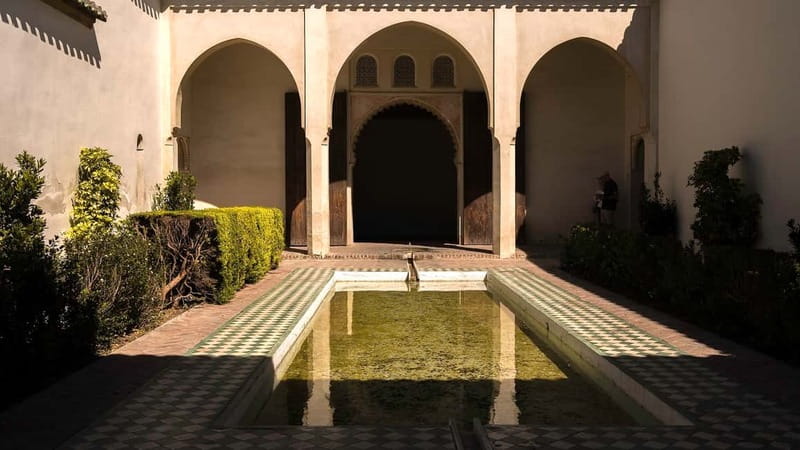
The Patio de Armas is another highlight. Think of it as the fortress’s internal “stage”: a functional courtyard with the feel of a place designed for movement, control, and gathering. A guide helps you understand how the space supports the larger defensive plan, rather than treating it like just another pretty courtyard.
Then you get the payoff that makes people keep saying the views are worth it. From the top of the hill, you can look out over the city and connect the ruins to today’s streets below. And you’ll hear about the Fortaleza de Gibralfaro, built in the 14th century to house troops and help protect the Alcazaba from attack.
That context matters. Once you hear the purpose behind the layout—who needed protection, from what, and why this hill—the Alcazaba feels less like a museum and more like a working system.
- Malaga: Catamaran Sailing Trip with Sunset Option
★ 4.4 · 8,613 reviews - Málaga: Alcazaba and Roman Theatre Guided Tour With Entry
★ 4.8 · 5,792 reviews - Ronda and Setenil Tour with Free Time and Map from Málaga
★ 4.8 · 5,344 reviews
Ramparts and panoramic views: where the whole defense plan clicks
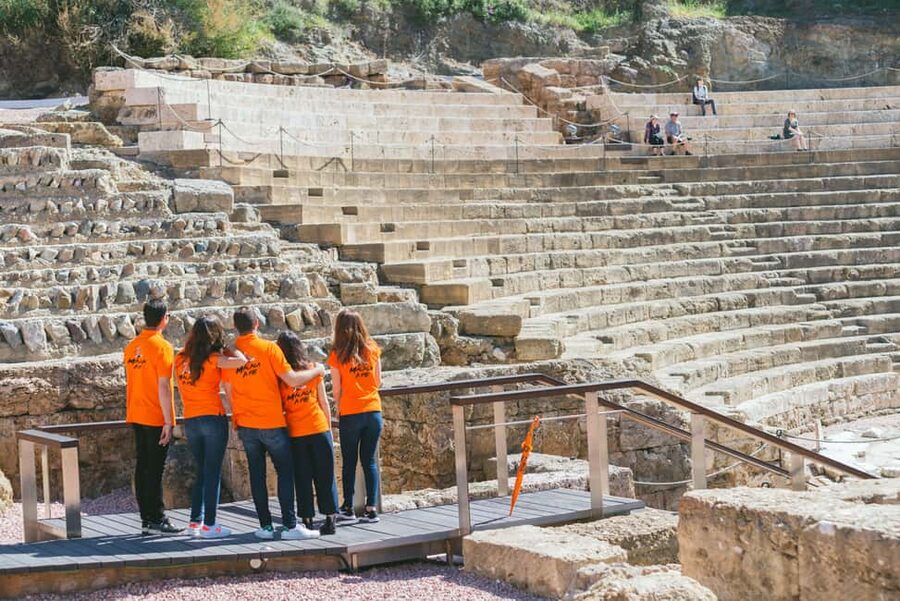
Climbing the ramparts isn’t just exercise. It’s the quickest way to understand how the Alcazaba functioned. From the walls, you see sightlines and elevation in a way that flat ground never can.
You’ll also get a broader sense of the area around Málaga’s fortress complex, including angles toward the Fortaleza de Gibralfaro. Your guide’s explanations help you connect three layers in one view:
- Roman-era strategic ground near the theatre
- Moorish citadel design in the Alcazaba
- Later military use, including the 14th-century protection role of Gibralfaro
One extra note: this tour may feel more challenging than it looks from the street. It’s not marketed as a gentle stroll. It includes climbing and uneven walking, so if you’re unsure, take that seriously and consider whether you can comfortably handle stairs and inclines.
If you’re traveling with kids or a stroller, you should plan conservatively. One family reported being able to bring a stroller up partway, but the overall route includes stairs and inclines. If that’s your situation, expect limits and talk with your provider ahead of time if possible.
The Reconquista chapter: why the ruins tell more than one story
A big part of why this tour is worth paying for (even at a moderate price) is how it frames change over time. You’re not only looking at Roman structures and then walking away. You hear how the Alcazaba’s role evolved—especially after major events like the 15th-century Siege of Málaga during the Reconquista.
That matters because it explains why parts of the complex look the way they do. Fortresses often get strengthened, adapted, and repurposed depending on who holds the city and what kind of threat they’re facing. When you understand the pressure that shaped the place, details start to make sense fast.
Guides also tend to help you “see” the fortress at different moments. Some guides (including those who use photos) make it much easier to imagine the former chapel and the defensive logic when you’re standing inside. It’s easier to connect the dots when the guide gives you visual anchors, not just names and dates.
If you like history that has cause-and-effect instead of a timeline dump, this stop format works well: theatre first, then fortress, then panoramic and defensive context to tie it together.
Price and value: why $17 can feel like a steal here
At about $17 per person and 90 minutes total, you’re paying for three things that self-guided visitors often miss.
First, you get guided storytelling that connects the Roman Theatre to the Alcazaba’s fortress design. These are separate sites that feel more meaningful when your guide explains the bridge between them.
Second, you get time efficiency. With skip-the-line entry and a separate entrance, you avoid turning a short visit into a line-stand. That’s a real value factor in high-traffic monuments.
Third, you pay for interpretation. The Roman Theatre and Alcazaba are impressive on their own, but interpretation is what turns them into a memorable experience. Many guides keep it interactive and funny, and that helps the story stick.
So yes, $17 is low for what you get. But the bigger reason it’s good value is that you’ll likely leave with a clearer understanding of how Málaga became strategically important—and how later eras built on what came before.
What to wear, what to do, and how to get the best guide experience
This tour’s success depends on basic prep.
Bring comfortable shoes. You’re walking on historic ground, and you’ll be dealing with slopes and steps. Also keep your pace in mind. The tour is tight on time—40 minutes in each main area—so you don’t want to fight your footing.
If you care about photos, plan to shoot from the ramparts when you have the view spread out. The hilltop moments are a natural visual reward, and your guide can usually help point out what you’re looking at.
A final practical tip: listen for the guide’s “spot checks.” Some guides are known for asking what you notice—using visible features as conversation starters—so stay alert. It turns the visit from passive watching into active learning.
And if your guide emphasizes not touching original materials (a sensible practice), take the hint. It protects the site and keeps the experience respectful.
Is this tour right for you?

This tour is a strong match if you want a focused history-and-views walk in Málaga, with professional local interpretation and a clear link between Roman and later fortress eras. It’s also a good choice if you’d rather pay for context than try to decode the complex yourself.
It may be the wrong pick if you have back problems or mobility impairments, or if you use a wheelchair, because the experience isn’t set up as accessible-friendly. It’s also not appropriate for pets.
If you want a safe bet and you can handle uneven ground and inclines, this is one of the most worthwhile ways to spend about an hour and a half in this part of Málaga.
Should you book the Málaga Roman Theatre and Alcazaba guided tour?

I think you should book this if you value interpretation and time efficiency. You’re getting two top sites, skip-the-line entry, and a guide who can connect the Roman Theatre, the Alcazaba, and the later siege and defense story into one walk.
If you’re sensitive to stairs and uphill walking, take that warning seriously before you commit. But if you’re comfortable moving and you enjoy history you can visualize, this tour is a solid use of a morning or early afternoon—especially because the hilltop views turn the work of climbing into something you’ll remember.
FAQ
Where is the meeting point?
You meet at Pirámide de Cristal on Calle Alcazabilla. Look for the orange umbrella.
How long is the tour?
The total duration is about 90 minutes.
What does the ticket include?
It includes a guided walking tour and entrance to both the Alcazaba and the Roman Theatre.
Do I need to buy separate tickets for the sites?
No. Entrance is included for the Alcazaba and the Roman Theatre, and the tour includes skip-the-line entry via a separate entrance.
What languages are available?
The live guide offers Spanish and English.
What should I bring?
Wear comfortable shoes.
Is this tour suitable for people with mobility issues or wheelchairs?
No. It is not suitable for people with back problems, mobility impairments, or wheelchair users.
Can I bring a pet?
No, pets are not allowed.
FAQ
What if I arrive late?
If you arrive late to the meeting point, you won’t be able to enjoy the visit and the refund won’t be made.
Is free cancellation available?
Yes. You can cancel up to 24 hours in advance for a full refund.
Can I reserve now and pay later?
Yes. You can reserve your spot and pay later to keep your plans flexible.
If you want, tell me what day and time you’re considering (and your comfort level with stairs), and I’ll help you decide whether this is the right slot for your Málaga schedule.
More Málaga Trips, Reviewed
- Malaga: Catamaran Sailing Trip with Sunset Option
★ 4.4 · 8,613 reviews - Málaga: Alcazaba and Roman Theatre Guided Tour With Entry
★ 4.8 · 5,792 reviews - Ronda and Setenil Tour with Free Time and Map from Málaga
★ 4.8 · 5,344 reviews - From Málaga: Caminito del Rey Day Trip & Guided Tour
★ 4.8 · 4,683 reviews - From Malaga and Costa del Sol: Gibraltar Tour
★ 4.4 · 4,483 reviews - Malaga: Teatro Flamenco Malaga Live Flamenco Show
★ 4.7 · 4,254 reviews
The Alcazaba and Its Roman Stage
- Málaga: Alcazaba and Roman Theatre Guided Tour With Entry
★ 4.8 · 5,792 reviews - Alcazaba Malaga Guided Tour
★ 5.0 · 1,457 reviews - Malaga Tour with Cathedral, Alcazaba and Roman Theatre
★ 4.5 · 548 reviews - Málaga: Cathedral, Alcazaba, Roman Theater Walking Tour
★ 4.7 · 315 reviews - Malaga Private Walking Tour, Alcazaba & Catamaran Cruise
★ 5.0 · 159 reviews - Malaga Private Walking Tour, Alcazaba & Catamaran Cruise
★ 4.7 · 92 reviews
Fresh Off the Boat: Newly Reviewed Málaga Trips



Alcazaba & Roman Theatre, side by side.
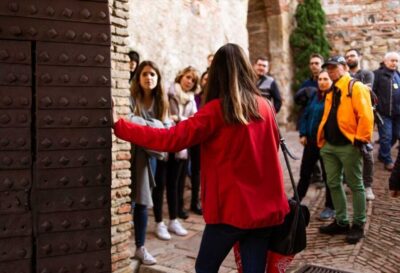 ★ 4.8Alcazaba and Roman Theatre Guided Tour With EntryFrom $145,792 reviews
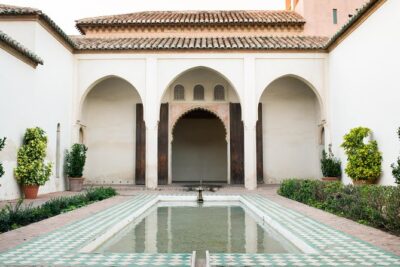 ★ 5.0Alcazaba Malaga Guided TourFrom $211,457 reviews
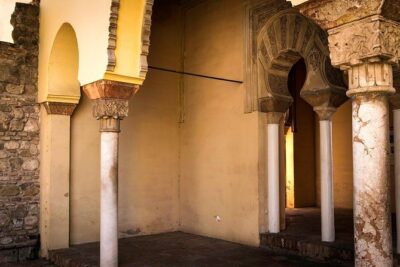 ★ 4.5Malaga Tour with Cathedral, Alcazaba and Roman TheatreFrom $45548 reviews
 ★ 4.7Cathedral, Alcazaba, Roman Theater Walking TourFrom $53315 reviews
 ★ 5.0Malaga Private Walking Tour, Alcazaba & Catamaran CruiseFrom $264159 reviews
★ 4.7Malaga Private Walking Tour, Alcazaba & Catamaran CruiseFrom $25892 reviews
★ 5.0Malaga Private Walking Tour, Alcazaba & Catamaran CruiseFrom $264159 reviews
★ 4.7Malaga Private Walking Tour, Alcazaba & Catamaran CruiseFrom $25892 reviews
 ★ 4.51.5-Hour Roman Theater and Alcazaba Castle Walking TourFrom $2174 reviews
 ★ 4.9Alcazaba, Picasso and more, walking tour with 5 VR experiences !From $2336 reviews
Other lists this tour appears in