
Review · WORKSHOPS
Malaga: Drawing & Painting Lesson Outdoors
If you’ve ever looked at a city photo and thought I could draw that, this helps. In Málaga, you learn to sketch with real tools, in real streets, using the city’s sights as your subject. I like that it turns sightseeing into skill-building, not just photos.
I especially enjoy the variety of media you get to use—watercolor, soft pastels, markers, charcoal, plus basic pencils—so even if you’re rusty, you’re not stuck with one pencil-and-paper method. Another big win is the guided focus on making Malaga look right: architecture, proportions, and how to build a scene so it feels like your own postcard from the day.
One possible drawback: 1.5 hours goes fast. If you’re aiming for a more finished, highly detailed piece, you may end up with a “strong sketch plan” rather than a full final artwork.
In This Review
- Key things to know before you go
- A one-and-a-half-hour art break in Málaga’s streets
- Meeting by the Centre Pompidou Colors Cube, then picking your subject
- Your toolbox: watercolor, soft pastels, markers, charcoal, and pencils
- Learning to draw Malaga: perspective, proportions, and architectural detail
- Three Malaga scenes to sketch: Port, park nature, and Old Town monuments
- The Port: boats, reflections, and the lighthouse
- The Park: tropical nature in motion and texture
- Old Town: Roman Theater and Cathedral-style architecture
- How the teacher keeps you productive (without drowning you in rules)
- Price and value: is $65 a fair deal for 1.5 hours?
- What you should bring (and what you don’t need)
- Who this lesson suits best
- Should you book this outdoor drawing lesson in Málaga?
- FAQ
- Is this lesson beginner-friendly?
- What drawing and painting materials are included?
- How long is the activity?
- How big is the group?
- What languages is the instructor teaching in?
- Where do I meet the instructor?
Key things to know before you go
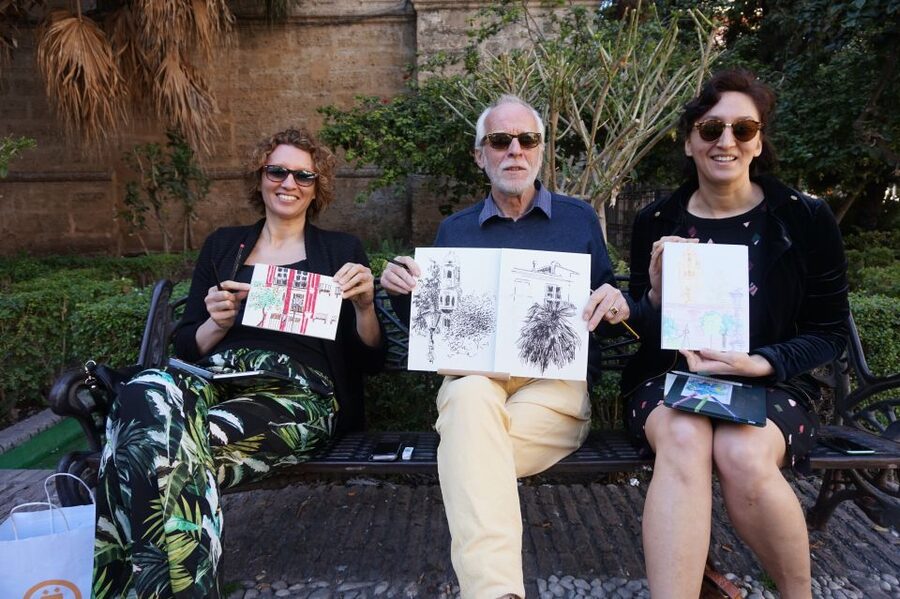
- Small group pace (10 people max): you get attention without feeling rushed in a crowd.
- All materials provided: you don’t need to pack sketch gear or worry about what to buy.
- Multiple drawing tools, not just one: watercolor, pastels, markers, charcoal, and pencils are all part of the session.
- You choose a scene to sketch: Port (lighthouse, boats), park nature, or Old Town architecture.
- Guidance on how to see: help with perspective, proportions, and drawing the details that matter.
Brush and lens around Málaga, more sessions
- Paint your own Picasso★ 5.0 · 61 reviews
- Express Tuk-Tuk Tour in Malaga: Gibralfaro Viewpoint and Photography★ 4.1 · 56 reviews
- Málaga: Paint your own Picasso★ 5.0 · 49 reviews
- Málaga: Professional Photoshoot and City Tour★ 4.9 · 44 reviews
A one-and-a-half-hour art break in Málaga’s streets
This class is a simple idea with a smart payoff: use Malaga as your art reference, then practice techniques right where you’ll see them. You’re not working from a museum example or a printed template. You’re learning to look—angles, edges, shadows, and the “story” of a view—while you draw it.
You’ll spend 1.5 hours outside, with an art teacher guiding you from first marks to a finished sketch or partial artwork you can be proud of. The tone is practical and beginner-friendly, but it still gives upgrades for people who have drawn before. That balance is rare in short workshops.
Because it’s an outdoors session, it’s worth dressing for comfort and having the kind of flexibility where you can work wherever the best view opens up. If you’re expecting a slow, sit-and-paint experience, you might feel slightly compressed by the time.
Meeting by the Centre Pompidou Colors Cube, then picking your subject
Your meeting point is right next to the Colors Cube of the Centre Pompidou in Malaga. That’s a clear anchor. It also puts you in the part of the city where it’s easy to move into different “moods” for sketching—port vibes, Old Town shapes, and park greenery.
Once you start, you’ll choose what to draw from options tied to Malaga’s most recognizable views. The goal isn’t to draw everything. It’s to select one scene that has strong shapes and details you can simplify into a convincing sketch.
Here’s the key choice you’ll make:
- Port scenes like reflections, boats, and the lighthouse
- Park scenes focused on tropical nature
- Old Town scenes with architectural highlights such as the Roman Theater or the Cathedral
Choosing your subject early helps you stay focused. It also means your materials and technique choices make sense—charcoal for strong contrast, watercolor for atmosphere, soft pastels for texture, and so on.
Your toolbox: watercolor, soft pastels, markers, charcoal, and pencils
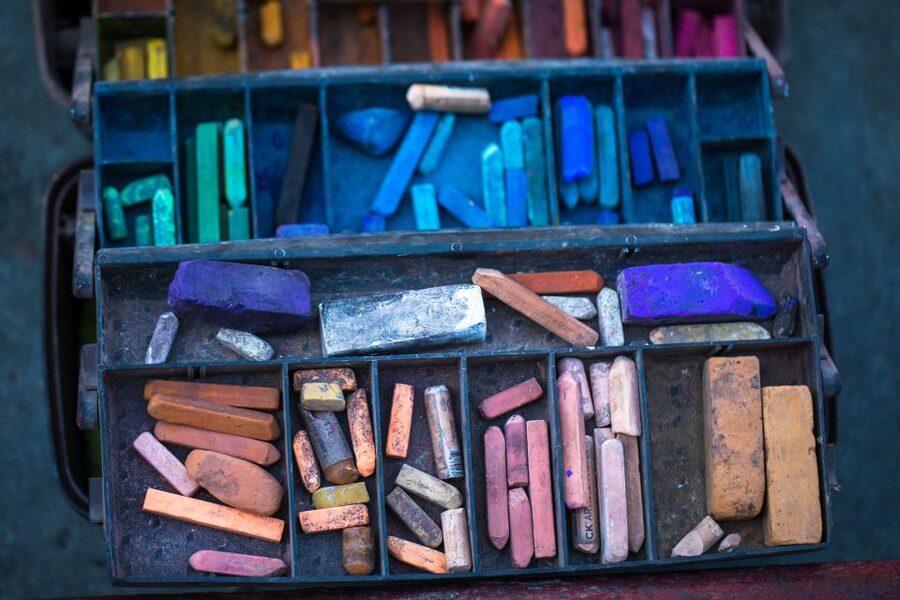
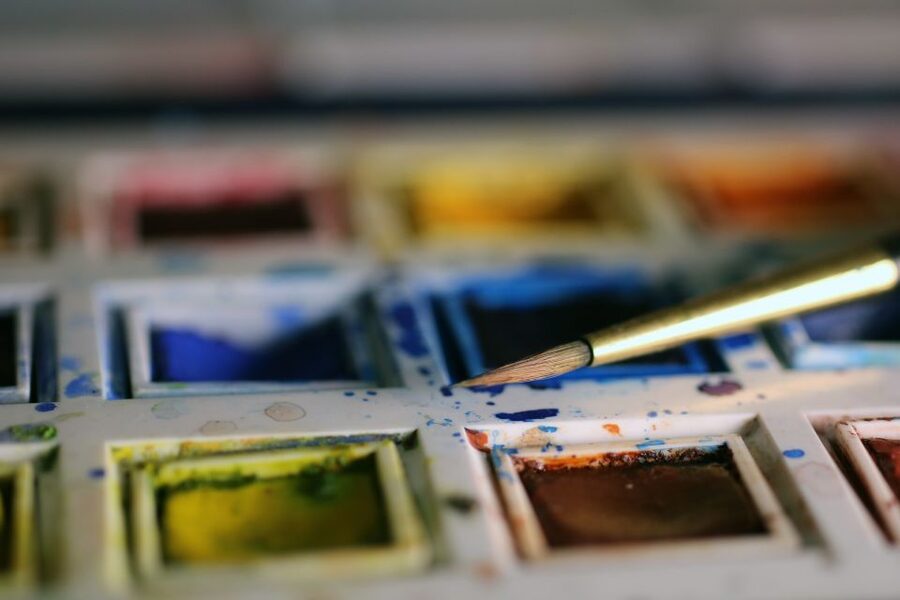
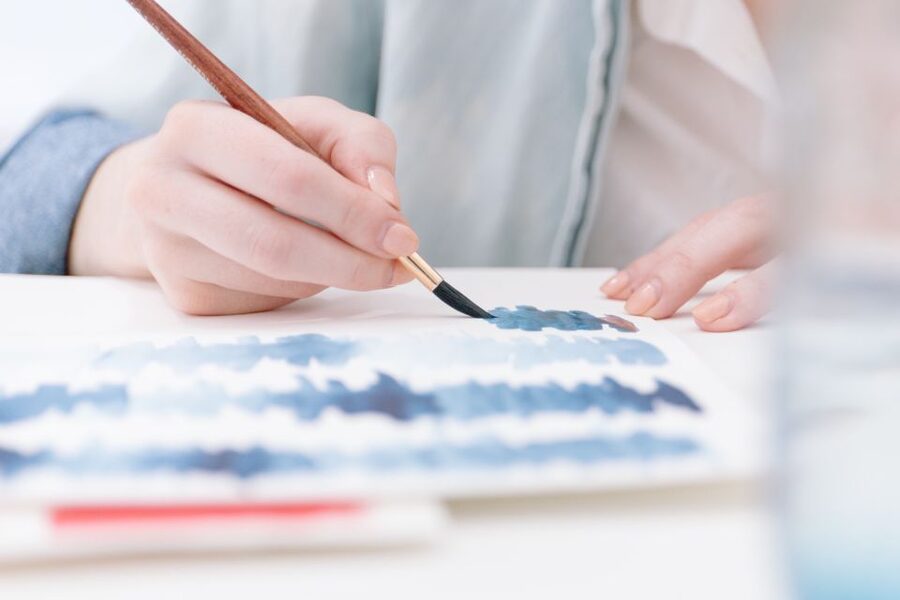
The workshop includes all materials, so you can show up empty-handed and still leave with a sketch. The kit is broad: paper, watercolors, brushes, pencils, soft pastels, markers, and charcoal.
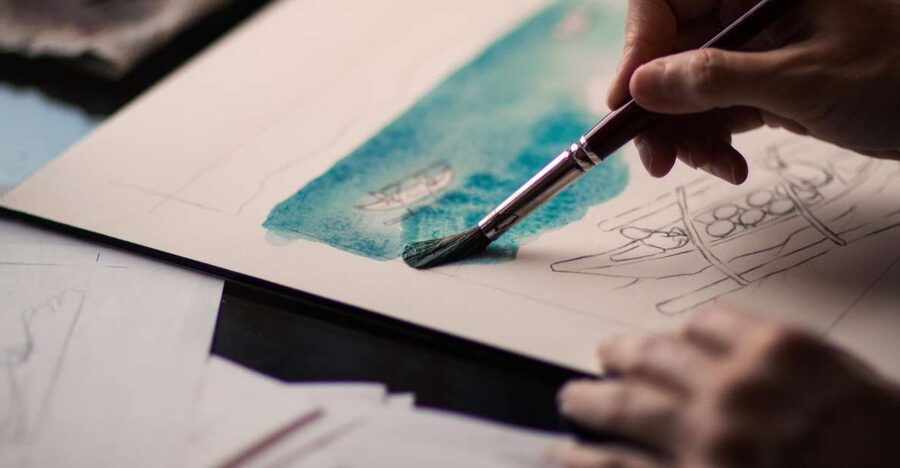
I like this setup because it reduces the intimidation factor. If one medium feels awkward at first, you can switch gears quickly. It also helps you learn how each tool behaves: charcoal is great for bold darks, watercolor can suggest light and mood, and markers help you lock down outlines fast.
A helpful detail from a session example: in some instruction, the teacher emphasizes how to build color with different media so your drawing doesn’t look flat. One guide, Alicia, is mentioned as focusing on the structure of the image (like perspective and proportion) and then supporting the coloring with multiple mediums—resulting in a lighthouse-and-harbor sketch and a strong sky blue tone. Even if your final picture is different, the teaching approach is what matters: you’re learning a system, not just producing something pretty.
Worth a look before you lock in this Málaga day out:
- Paella and Sangria Workshop in Malaga
★ 5.0 · 108 reviews - Malaga: The Ultimate Tapas Workshop with Market Visit
★ 4.9 · 108 reviews - Malaga: Authentic Paella Cooking Class with Sangría
★ 5.0 · 103 reviews
Learning to draw Malaga: perspective, proportions, and architectural detail

This is where the class becomes more than a fun stroll. The teacher doesn’t just hand you tools and let you figure it out. You get tips for recreating Malaga’s architectural highlights and making your view look believable.
You’ll practice the fundamentals in a way that’s easier than doing them from a textbook:
- Perspective: how lines and shapes “aim” toward depth
- Proportions: keeping elements in the right size relationship
- Color planning: using the media you have so it supports the structure
You can think of it like this: you’re building a small visual model of the scene. Once the model feels right, the details become simpler. This is especially valuable if you haven’t drawn in a long time or you’re starting from scratch.
The class also treats looking like a skill. You’ll be taught to see the city with different eyes—what to include, what to simplify, and how to make details feel intentional rather than random.
Three Malaga scenes to sketch: Port, park nature, and Old Town monuments
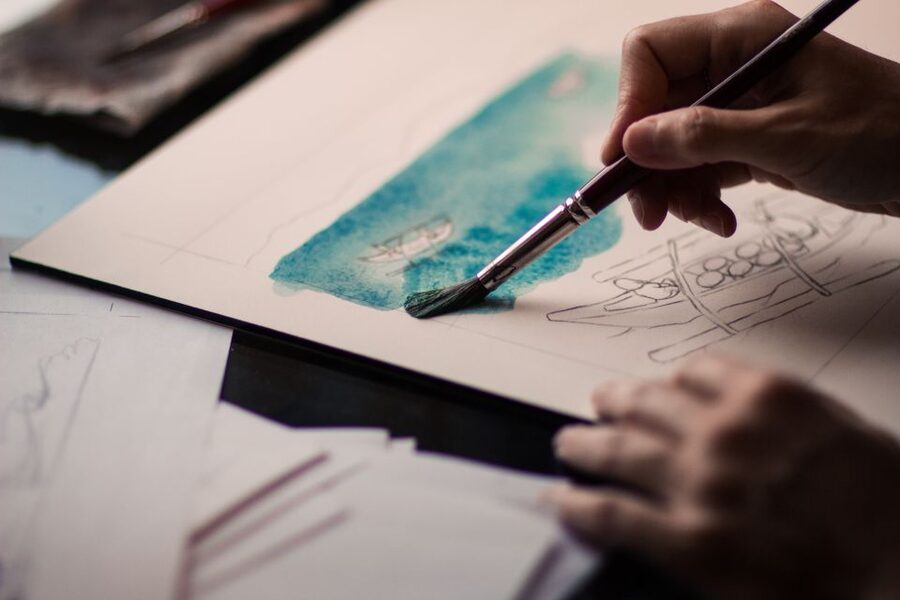
One reason this feels like a real Malaga experience is that your scene choice connects to actual landmarks and city “characters.” You’re not doing generic travel sketching—you’re picking from distinct visual worlds.
The Port: boats, reflections, and the lighthouse
If you choose the Port, your subject naturally gives you strong composition options: boats can form shapes, the lighthouse gives you a focal point, and reflections help you practice texture and light. Watercolor often shines here because it can suggest haze and brightness without forcing hyper-detail.
This scene is also a good fit for learning contrast. Charcoal or darker pencil marks can define the main forms, while lighter washes add atmosphere.
The Park: tropical nature in motion and texture
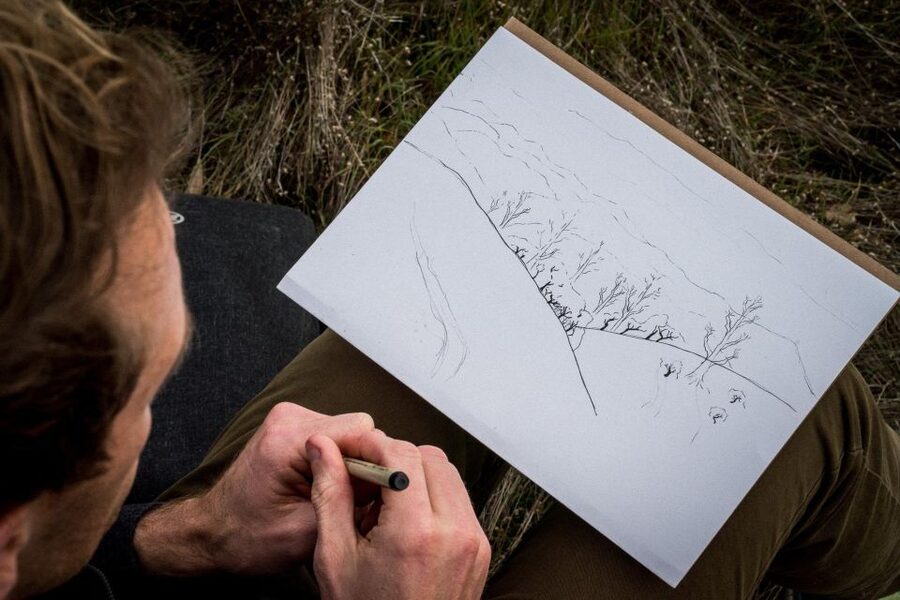
If you pick the park, the challenge becomes different. Nature is rarely made of clean straight lines, so you’ll likely focus on texture, leaf shapes, and how to represent greenery without overworking every detail. Pastels can be a fun way to show softness and layered color suggestions.
Old Town: Roman Theater and Cathedral-style architecture
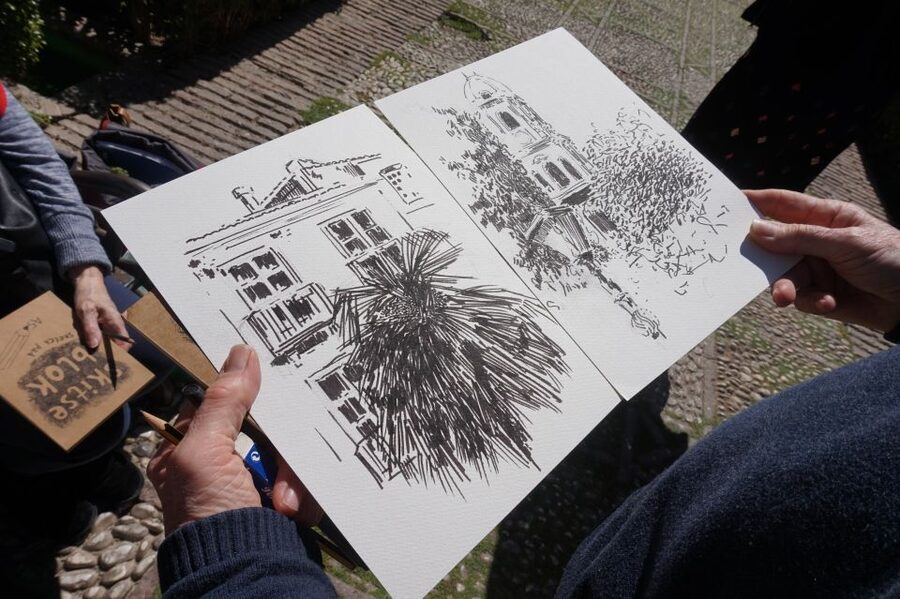
If Old Town is your choice, you’re working with one of the most satisfying drawing topics: buildings and monuments with clear structure. The Roman Theater and the Cathedral are both the kind of landmarks that make perspective practice feel meaningful.
Architecture rewards “good enough” accuracy. You don’t need perfect replicas; you need convincing alignment of major shapes so the whole drawing reads as the right place.
How the teacher keeps you productive (without drowning you in rules)
For a short class, the teaching method is the main value. The teacher uses guided steps to help you progress without getting stuck. That matters whether you’re brand new or you’ve doodled before.
The class supports different skill levels by adjusting the emphasis. If you’re new, you get help starting the image and building confidence. If you’ve practiced before, you can work on improving composition—things like how to organize the page and how to keep proportions from drifting.
You also get tips designed for this exact city. The teacher helps you recreate Malaga’s architectural highlights, so you’re not guessing what the “important bits” are. And because you’re outdoors, the reference is always in front of you, not in your memory.
If you’re curious about families: there’s an example of an instructor being fantastic with an 11-year-old and a parent who had very little drawing experience. That suggests the pace and guidance can work well for kids who can pay attention for the session.
Price and value: is $65 a fair deal for 1.5 hours?
At $65 per person for a 1.5-hour outdoor lesson, the value comes from three things you’d otherwise have to solve yourself:
- You get guided instruction (structure, technique, feedback)
- You get all the materials included (paper and multiple media)
- You get a small group (10 people max), which usually means less time waiting and more time asking questions
If you try to “do it yourself,” you’d still need to source paper, watercolors, brushes, pastels, charcoal, and whatever else you end up wanting. Then you’d need the know-how to use them. Here, the cost is paying for both tools and teaching.
Is it a bargain? It’s priced more like a specialized activity than a casual walking tour. But the hands-on instruction and included materials make it feel like you’re paying for real output, not just a scenic hour and a half.
One detail to consider: a session of 1.5 hours can be perfect for a focused sketch, but if you’re the type who wants to finish a more detailed, layered final piece, you might wish you had a bit more time. That’s not a failure of the class—it’s just the nature of short workshops.
What you should bring (and what you don’t need)
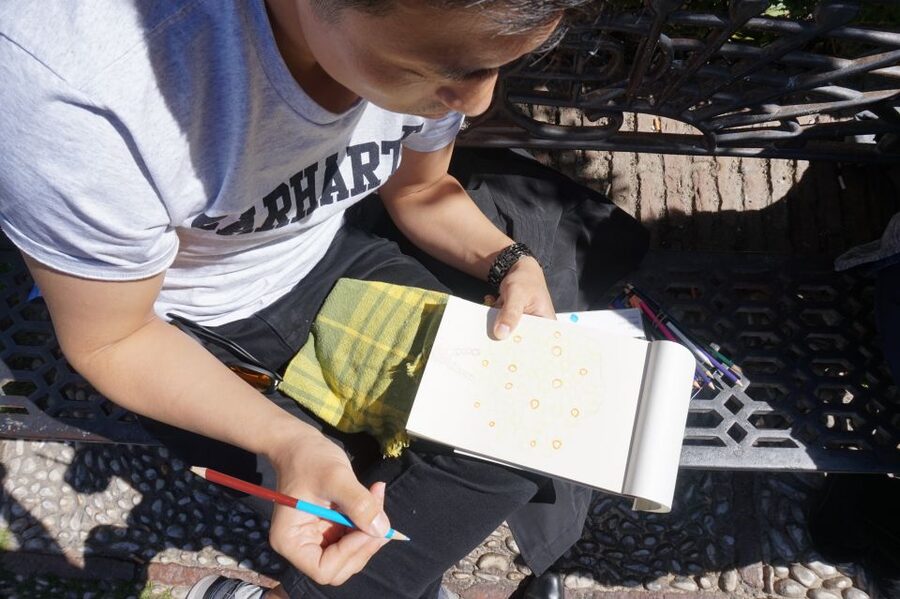
You don’t need to buy a sketch kit. Materials are provided, including the paper and the full range of drawing tools used during the lesson.
What you should bring is the mindset. Come ready to experiment. Your first marks don’t have to be correct. The whole structure of the class is about learning by doing with guidance.
If you get to the meeting point early, you’ll have a calmer start. And once the teacher assigns the first steps, you can settle into the rhythm: plan the image, choose the medium approach, then build detail.
Who this lesson suits best
This works best for you if:
- You want a low-pressure way to start drawing again
- You’re curious about watercolor, pastels, markers, and charcoal but don’t know how to use them
- You like the idea of turning Malaga sightseeing into something you can keep
- You’re traveling with someone who wants an activity that’s not just another photo stop
It may not be the best fit if:
- You want a long-form studio-style painting session
- You’re looking for a deep art history lecture instead of hands-on practice
- You’re the type who needs hours to “warm up” before making any progress
Should you book this outdoor drawing lesson in Málaga?
Yes, I’d book it if you want a fun, structured way to learn drawing techniques while seeing Malaga through a different lens. The big wins—materials provided, small group size, and teaching focused on perspective/proportions and architectural detail—make it easy to recommend.
If your main goal is a quick souvenir sketch that actually reflects your day, this hits the sweet spot. If you need something more like a marathon art session, you may want to pair it with another art activity later. For 1.5 hours, though, this is a smart use of time—and a genuinely different kind of travel memory.
FAQ
Is this lesson beginner-friendly?
Yes. The workshop is designed for people who like to draw but haven’t practiced in a while, people who have never drawn before, and people who want to try new painting techniques.
What drawing and painting materials are included?
The class provides paper, watercolors, brushes, pencils, soft pastels, markers, and charcoal.
How long is the activity?
It lasts 1.5 hours.
How big is the group?
It’s a small group limited to 10 participants.
What languages is the instructor teaching in?
The instruction is offered in Spanish, English, and Italian.
Where do I meet the instructor?
You meet right next to the Colors Cube of the Centre Pompidou.
More Workshops Around Málaga
- Málaga: Spanish Cooking Workshop with Paella and Sangria
★ 4.9 · 613 reviews - Paella Cooking Class in Malaga
★ 5.0 · 209 reviews - Paella Cooking Class with English Guide in Malaga
★ 5.0 · 149 reviews - The Ultimate Tapas Workshop in Malaga
★ 5.0 · 119 reviews - Paella and Sangria Workshop in Malaga
★ 5.0 · 108 reviews - Malaga: The Ultimate Tapas Workshop with Market Visit
★ 4.9 · 108 reviews
More Málaga Trips, Reviewed
- Malaga: Catamaran Sailing Trip with Sunset Option
★ 4.4 · 8,613 reviews - Málaga: Alcazaba and Roman Theatre Guided Tour With Entry
★ 4.8 · 5,792 reviews - Ronda and Setenil Tour with Free Time and Map from Málaga
★ 4.8 · 5,344 reviews - From Málaga: Caminito del Rey Day Trip & Guided Tour
★ 4.8 · 4,683 reviews - From Malaga and Costa del Sol: Gibraltar Tour
★ 4.4 · 4,483 reviews - Malaga: Teatro Flamenco Malaga Live Flamenco Show
★ 4.7 · 4,254 reviews
Brush, Lens and Málaga Light
- Paint your own Picasso
★ 5.0 · 61 reviews - Express Tuk-Tuk Tour in Malaga: Gibralfaro Viewpoint and Photography
★ 4.1 · 56 reviews - Málaga: Paint your own Picasso
★ 5.0 · 49 reviews - Málaga: Professional Photoshoot and City Tour
★ 4.9 · 44 reviews - Málaga: Creative Urban Photography Workshop
★ 5.0 · 22 reviews - Photoshooting in Malaga – Photo session by OhMyGoodGuide
★ 5.0 · 10 reviews
Fresh Off the Boat: Newly Reviewed Málaga Trips
Workshops, side by side.
 ★ 4.9Spanish Cooking Workshop with Paella and SangriaFrom $78613 reviews
 ★ 5.0Paella Cooking Class in MalagaFrom $84209 reviews
 ★ 5.0Paella Cooking Class with English Guide in MalagaFrom $84149 reviews
 ★ 5.0The Ultimate Tapas Workshop in MalagaFrom $84119 reviews
 ★ 5.0Paella and Sangria Workshop in MalagaFrom $84108 reviews
 ★ 4.9The Ultimate Tapas Workshop with Market VisitFrom $78108 reviews
 ★ 5.0Authentic Paella Cooking Class with SangríaFrom $77103 reviews
 ★ 5.0Malaga Tapas Cooking ClassFrom $8499 reviews
Other lists this tour appears in